

Gyeongsang · Andong, North Gyeongsang · House and estate
Imcheonggak House 안동 임청각
Andong Imcheonggak
A 1519 head house on the Nakdong, home of independence leader Yi Sang-ryong, cut through by a colonial railway now removed.
Overnight staysLived in
Imcheonggak is the head house (jongtaek) of the Goseong Yi clan, built in 1519 on the eastern slope of Yeongnamsan above the Nakdong River in Andong. It is one of the oldest family houses still standing in Korea, and its detached pavilion, Gunjajeong, is a Treasure. You can stay the night in it.
It is also a national memorial. Yi Sang-ryong (1858-1932), born here, sold the family property in 1911 to fund the independence movement in Manchuria and in 1925 became head of the Korean Provisional Government in Shanghai. Under Japanese rule a railway was laid through the house’s grounds. For decades trains ran past the front door; the tracks were lifted in 2021, and a restoration that is still under way in 2026 is giving the house back its setting.
What to look at
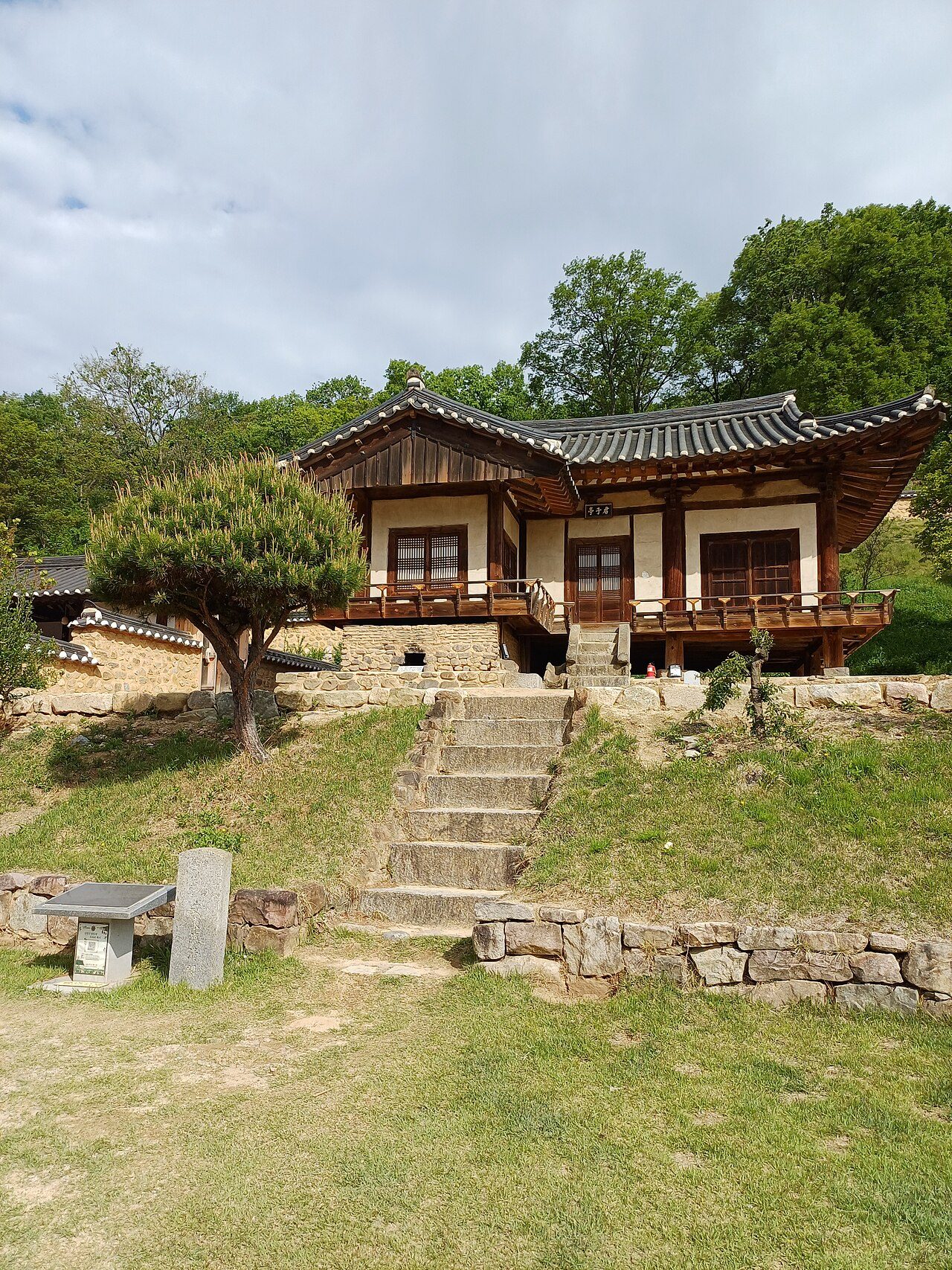
Gunjajeong 군자정
The detached hall of the house, built in the mid-Joseon period: three bays by two, with a hipped-and-gabled roof and a 丁-shaped plan in which a south-facing wooden hall meets an L of heated rooms. A veranda with railings runs round it, reached by two flights of stone steps. A plaque is attributed to the scholar Yi Hwang (Toegye).
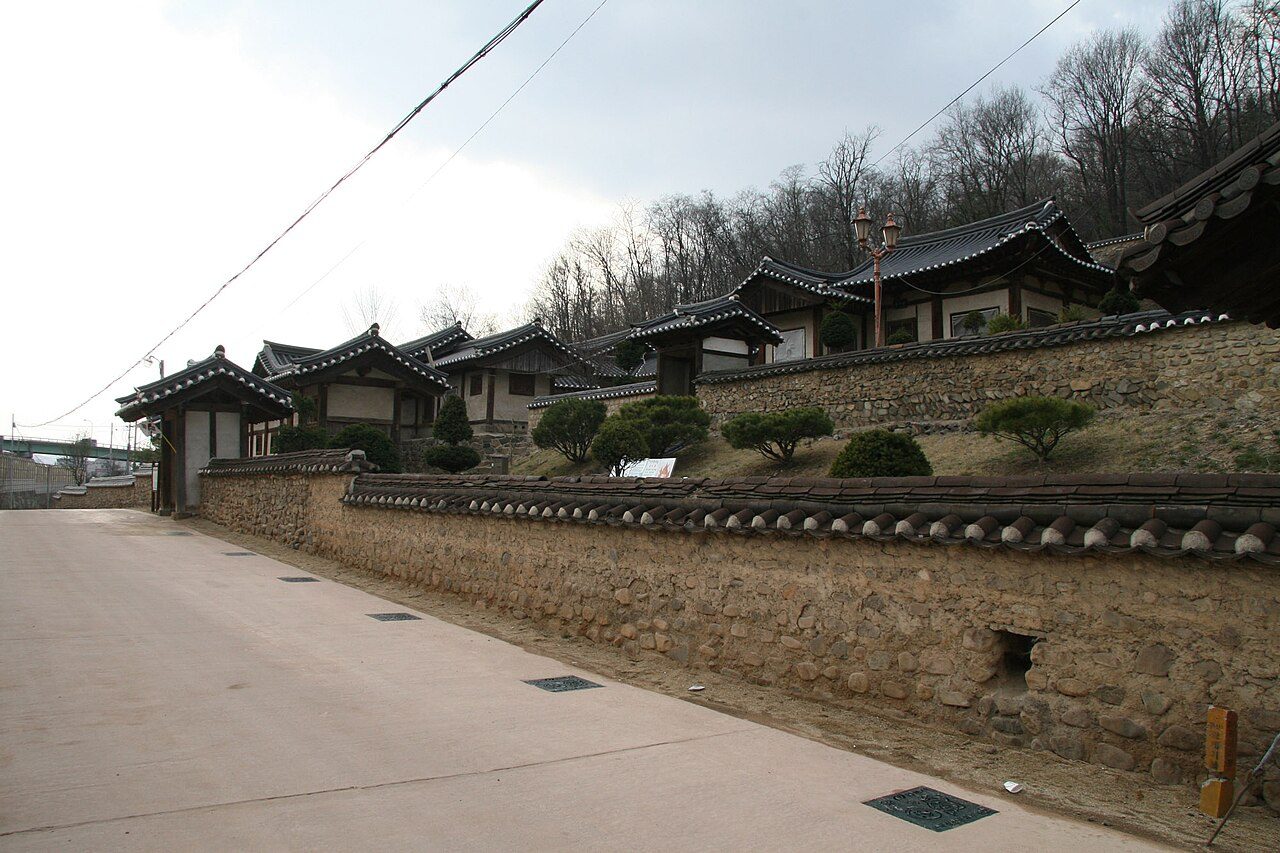
The haengnangchae from the road 행랑채
From the road the long servants’ wing behind its wall gives the measure of the house. The heritage record notes that even shorn of its outer wings, it conveys why the family called it a 99-kan house.
The former railway line 옛 중앙선 터
Stand where the track ran, between the house and the river. Imagining trains passing the gate for decades is the quickest way to understand why this restoration mattered so much in Korea.
Beopheungsa-site seven-storey brick pagoda 안동 법흥사지 칠층전탑
Close by stands the seven-storey brick pagoda of the Beopheungsa temple site, a National Treasure; the restoration plan folds it into the expanded protected zone. Nearby is the 1685 head house of the clan’s Tapdong branch.

History
The Korea Heritage Service dates the house to 1519, when it was built by Yi Myeong, a former official of the Ministry of Justice. It sits in the position pungsu (풍수) prizes: hill behind, river in front, facing south. During the Japanese invasions of the 1590s Ming troops were quartered here and part of the women’s quarters burned, according to a 2018 Newsis report on the restoration research. In the 18th century it passed to Yi Jong-ak (1726-1773), the clan’s 11th-generation head, whose painting album later became a key restoration source.
Imcheonggak is popularly called a 99-kan house, though documents from the colonial period record four buildings of 68 kan, and a 1913 sale contract 56 kan. Yi Sang-ryong left for Manchuria in January 1911, founding a settlers’ association and the Sinheung military school there; before leaving, the house’s website relates, he buried the ancestral tablets and vowed not to return until Korea was free. The house’s own account counts eleven independence activists across three generations of the family; a 2018 report gives nine.
When the colonial government built the Jungang (Central) Line, more than fifty kan of service wings and outbuildings were demolished and the track was run between the house and the river. After the line was moved, the tracks and ballast were cleared in 2021, beginning a restoration programme budgeted at 28 billion won. A history and culture hall opened temporarily in 2026, and two reconstructed houses either side of Imcheonggak are scheduled for completion by 2027.
Getting there
KTX-Eum to Andong Station, then city bus 112 from downtown (Kyobo Life stop), about 10 min
Take a KTX-Eum train to Andong Station. Andong’s tourism site gives city bus 112 from the Kyobo Life stop downtown, about 10 minutes to Imcheonggak; by road the house is about 3 km from the station.
VisitKorea puts it about ten minutes by car from Woryeonggyo footbridge, so it pairs easily with an evening in the city.
Route checked 15 November 2026 against: 안동 임청각 (문화유산) (Andong City Tourism (tourandong.com)). Bus numbers and stops change: check the official page before you set off.
When to go
SpringSummerAutumnWinter
Spring and autumn are best for staying the night. In 2026 the restoration hall opened during Andong’s Wolyeong night-walk event, and the Andong Mask Dance Festival fills the city in late September and early October. Book stays ahead in festival season.
Sources
- 안동 임청각, Korea Heritage Service (National Heritage Portal) (read 15 November 2026)
- 임청각의 역사, Imcheonggak (official site) (read 15 November 2026)
- Imcheonggak House, VisitKorea (Korea Tourism Organization) (read 15 November 2026)
- 현존 문서상 임청각 규모는 4동 68칸 (2018-04-30), Newsis (read 15 November 2026)
- 임청각 복원 관련 보도 (2026-08-04), Newsis (read 15 November 2026)
- 안동 임청각 (문화유산), Andong City Tourism (tourandong.com) (read 15 November 2026)
- Andong mask dance festival wraps up (2026-10-05), The Herald Business (Herald Corporation) (read 15 November 2026)