
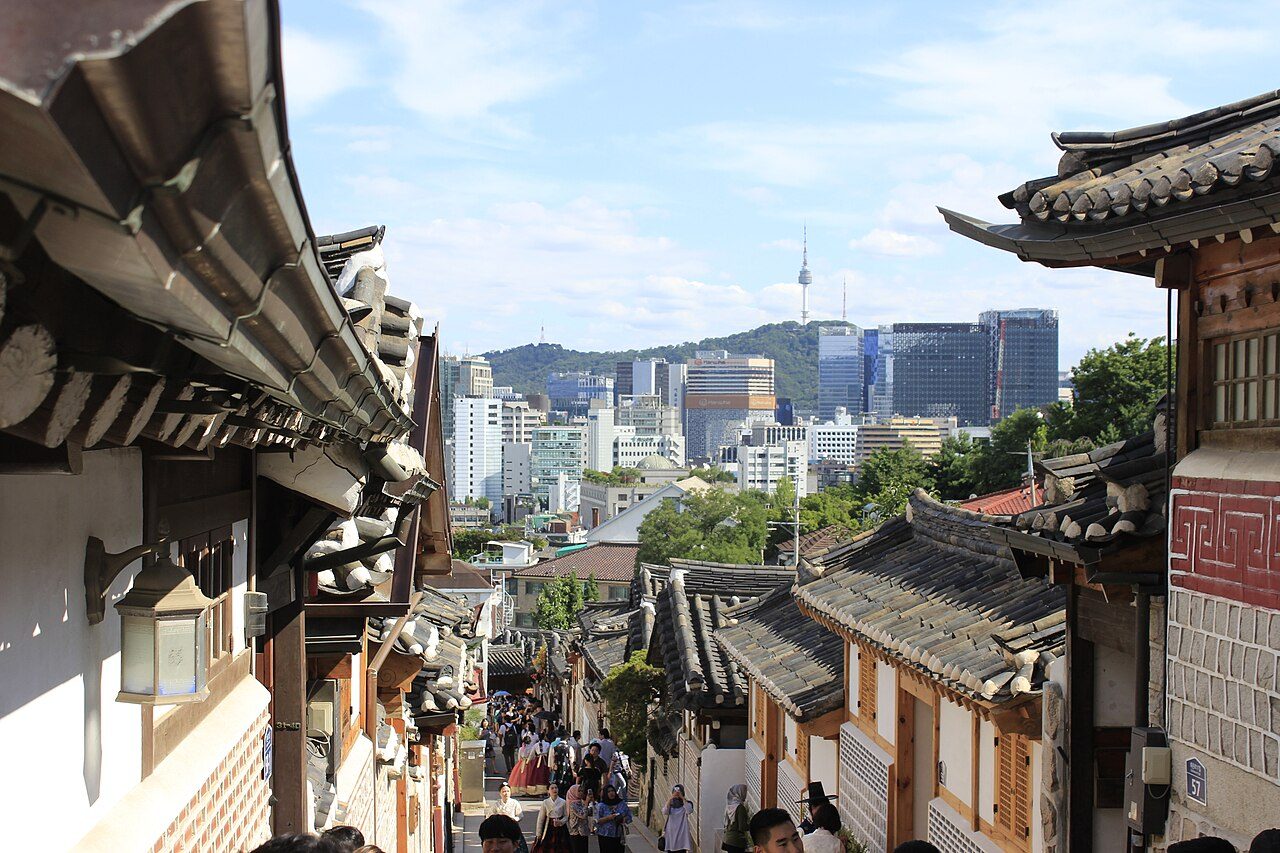

Read a hanok
Twelve short explainers: what each part of the house does, and what to look for when you are standing in front of one.
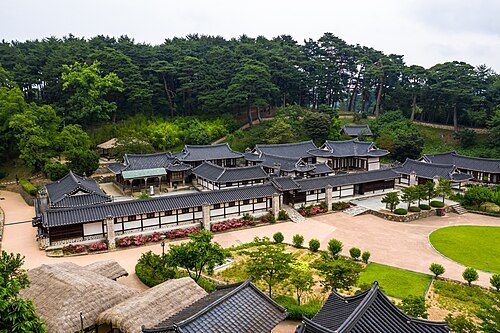 한옥의 배치 · hanogui baechi
How a hanok is laid out
Bays counted between columns, separate buildings for men, women, servants and ancestors, and plans shaped like Korean letters.
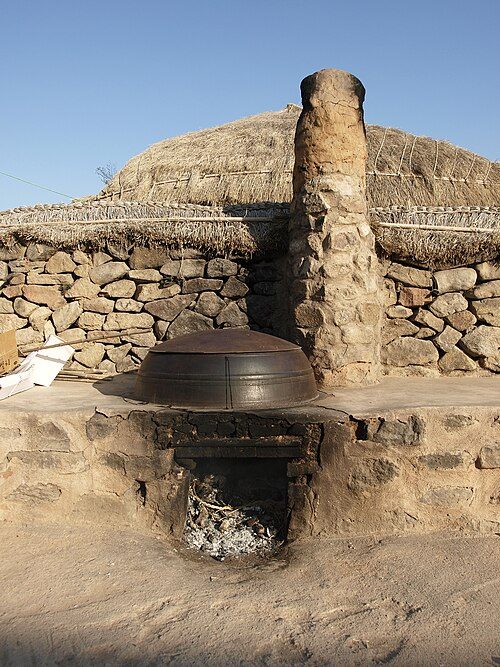 온돌 · ondol
Ondol: the heated floor
How a fire lit outside the room warms its stone floor through flues beneath it, and why Korean life settled onto that floor.
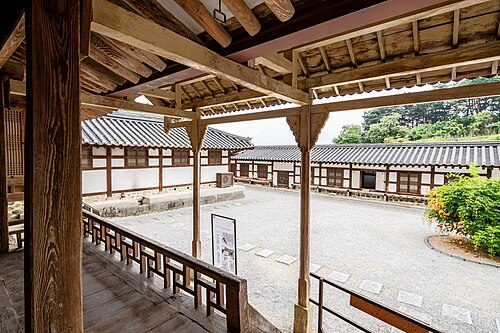 마루 · maru
Maru: the wooden floor
The raised board floor that sits beside every heated room: cool in summer, swept clean for rites, and built so it can be tightened.
 기와 · giwa
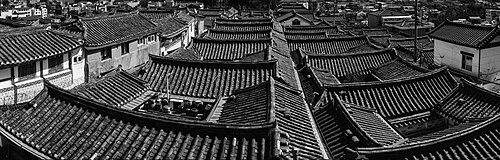
Giwa: the tiled roof and its curve
Paired clay tiles, a heavy bed of earth, deep eaves and a corner rafter that lifts the roof’s edge: how the hanok roof works.
All twelve: maru, giwa, madang, hanji doors, pungsu siting, Jeju stone houses and more →
Places to visit
Lived-in villages, city hanok quarters, great family houses and a palace residence, from Seoul to Jeju.
 Gyeongsang · Historic village
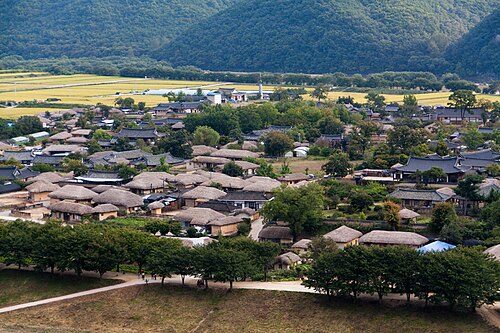
Hahoe Folk Village
안동 하회마을
The Pungsan Ryu clan’s village in a loop of the Nakdong: tiled head houses ringed by thatch, all turned to face the river.
UNESCOOvernight staysLived in
 Seoul · City hanok quarter
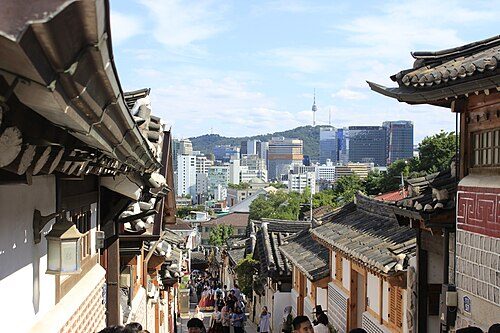
Bukchon Hanok Village
북촌한옥마을
Seoul’s densest cluster of lived-in hanok: 1920s-30s townhouses on old aristocratic land between two palaces, with visiting hours enforced.
Overnight staysLived in
 Jeju · Historic village
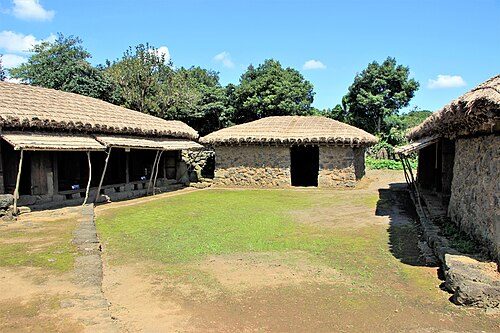
Seongeup Folk Village
제주 성읍마을
Jeju’s old county seat: thatched houses roped down against the wind, basalt walls, curving olle lanes and jeongnang gate poles.
Lived in
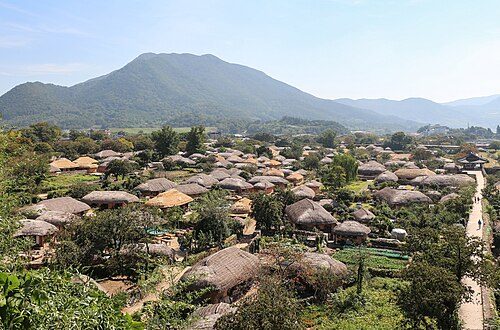 Jeolla · Historic village
Naganeupseong Walled Town
순천 낙안읍성
An inhabited Joseon county town inside its 1.4 km stone wall, with thatched southern houses, a clerk’s home and an old tavern.
Overnight staysLived in
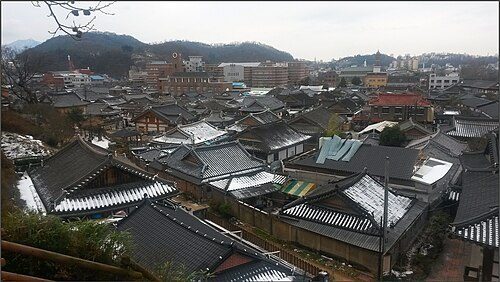 Jeolla · City hanok quarter
Jeonju Hanok Village
전주한옥마을
Some 735 hanok in Gyo-dong and Pungnam-dong, built by Koreans from the 1910s-30s beside the shrine of Joseon’s founder.
Overnight staysLived in
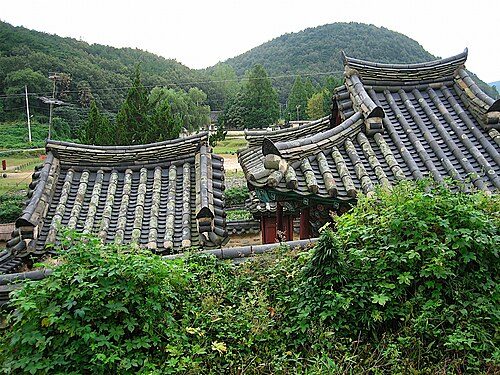 Gyeongsang · Historic village
Yangdong Village
경주 양동마을
Two clans, one valley: Son and Yi head houses on the ridges, thatched homes below, and a 1459 house where two scholars were born.
UNESCOOvernight staysLived in
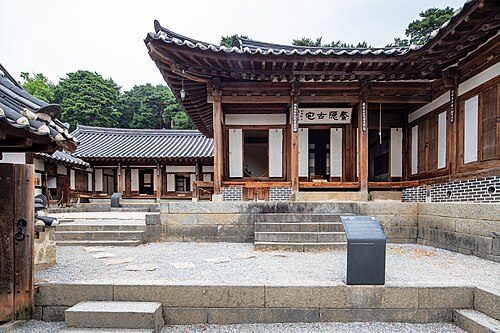 Gangwon · House and estate
Seongyojang House
강릉 선교장
A Gangneung gentry estate that grew for two centuries: low women’s house, high men’s hall, lotus-pond pavilion and a hanok stay.
Overnight staysLived in
 Seoul · Palace residence
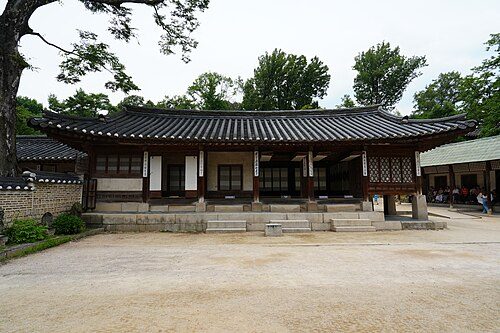
Yeongyeongdang
창덕궁 연경당
A scholar-official’s house built inside a royal garden: unpainted, with separate men’s and women’s courts, from the 1820s.
UNESCO
All 16 places, with a filter by region, season and overnight stays →
Where they are
Hanok survive where cities left them alone: on the hill between two Seoul palaces, inside a walled Joseon town in the south, in clan villages that stayed in one family for five centuries, and behind basalt walls on Jeju. Each dot is a place in this guide; the five in Seoul are on the central Seoul map.
- Seoul 서울: Bukchon, Seochon, Namsangol, Yeongyeongdang, Unhyeongung
- Gyeonggi 경기: Korean Folk Village
- Gangwon 강원: Seongyojang House
- Chungcheong 충청: Oeam Folk Village
- Jeolla 전라: Jeonju Hanok Village, Naganeupseong Walled Town, Gurye Unjoru Historic House
- Gyeongsang 경상: Hahoe Folk Village, Imcheonggak House, Yangdong Village, Gyeongju Gyochon Traditional Village
- Jeju 제주: Seongeup Folk Village
Itineraries
Routes by public transport, with how long each stop takes and how to get to the next.
1 dayA hanok day in SeoulA palace house built to look like a scholar’s home, the lanes of Bukchon and Seochon, and five rebuilt houses lit up in the evening.
2 daysA weekend in Jeonju Hanok VillageTwo days in Korea’s largest urban hanok district: the founder’s shrine, the view from Omokdae, a Confucian school, and a night under a tiled roof.
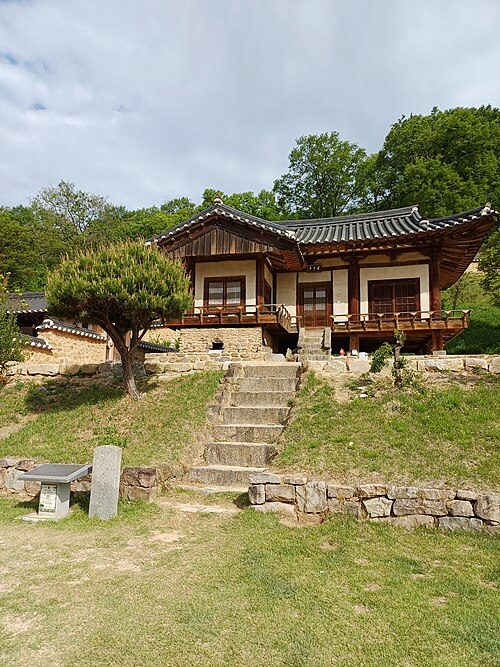 2 daysAndong and Hahoe in two daysA 1519 head house by the river, a clan village in a river loop, the cliff that frames it, and two of Korea’s finest Confucian academies.
1-2 daysGyeongju’s hanok: Yangdong and GyochonA two-clan village on the hills north of Gyeongju, then the Choi family house and Confucian school in the heart of the Silla capital.