

Gyeongsang · Gyeongju, North Gyeongsang · Historic village
Yangdong Village 경주 양동마을
Gyeongju Yangdong Maeul
Two clans, one valley: Son and Yi head houses on the ridges, thatched homes below, and a 1459 house where two scholars were born.
UNESCOOvernight staysLived in
Yangdong is a clan village shared by two families, the Wolseong Son and the Yeogang Yi, spread over the ridges and valleys of a small range of hills about 40 ri (roughly 16 km) north-east of central Gyeongju along the Hyeongsan River, by the heritage record’s reckoning. VisitKorea counts about 160 old houses, 54 of them more than two hundred years old, and descendants of both clans still live here. With Hahoe in Andong it was inscribed by UNESCO in 2010 as one of the ‘Historic Villages of Korea’.
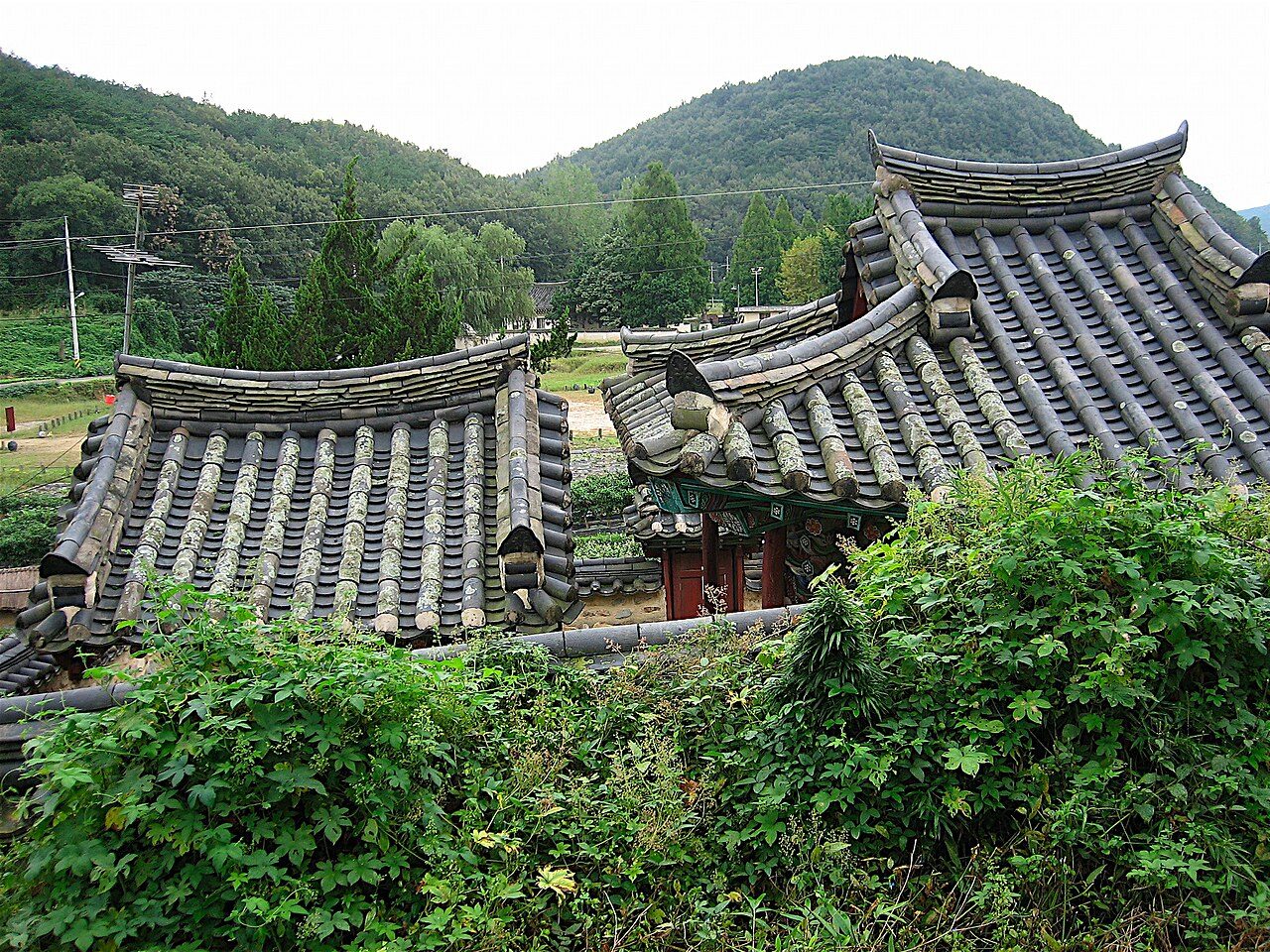
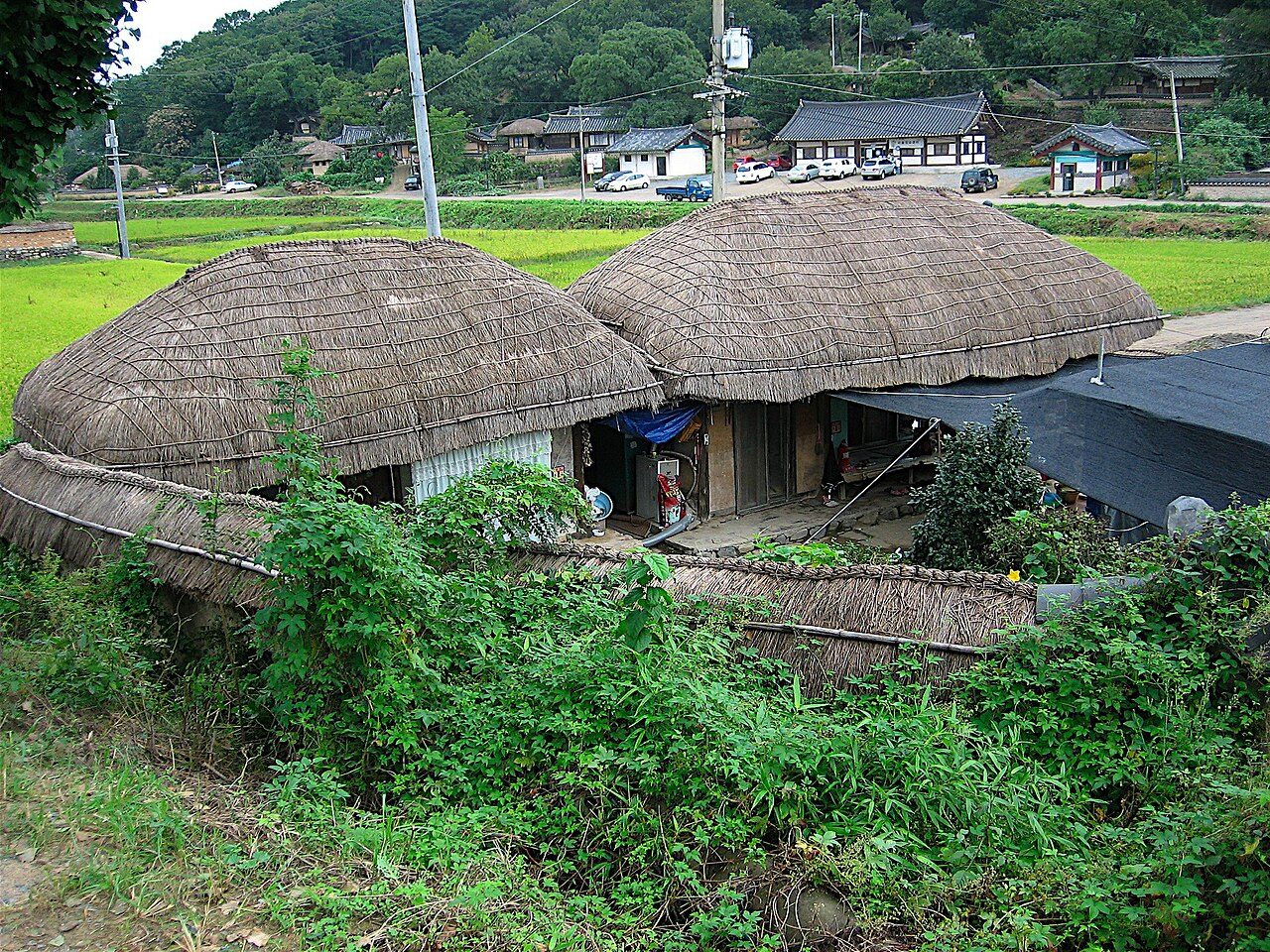
Where Hahoe sits on a flat river loop, Yangdong climbs. The Korea Heritage Service notes that the more senior a household, the higher and broader the ridge it occupies, so rank is written into the topography: head houses (jongtaek) on the spurs with tiled roofs and views, branch houses and thatched choga (초가) of dependants lower down. It is the best place in Korea to see a hierarchy of houses on a hillside, and some of the oldest yangban (양반) houses that survive.
What to look at
Songcheom Jongtaek (Seobaekdang) 송첨종택 (서백당)
The Son clan’s head house, built in 1459. An ㅁ-shaped anchae (안채) stands inside a straight gate wing, with the shrine on higher ground behind. The heritage record points out an unusual sarangchae: the small men’s room is set off in a corner so that rooms don’t face each other across the hall. An ancient juniper grows in the garden behind.
Hyangdan 향단
Built by Yi Eon-jeok while he was governor of Gyeongsang Province, and the most conspicuous house in the village. Its plan breaks the usual rules: the servants’, women’s and men’s wings are fused into one block shaped like the character 用, enclosing two small courts. A Treasure, and now also used for overnight stays.
Gwangajeong 관가정
Son Jung-don’s house, set on a rise. Men’s and women’s wings share one roof around a ㅁ-shaped court, and unusually the gate opens through the sarangchae (사랑채) itself. Walls close the sides and back but leave the front open, so the nu-maru (누마루) named ‘pavilion for watching the crops’ looks out over the fields.
Mucheomdang 무첨당
Part of Yi Eon-jeok’s head house: an L-shaped detached hall, five bays wide, with a three-bay open daecheong (대청) between two heated rooms and a raised maru. It worked as an extension of the men’s quarters for guests, rest and reading, and keeps the scholar’s belongings.
The ridges and lower lanes 마을 경관
Walk up one spur and down the next. Notice how the tiled head houses take the high points while thatched houses cluster below and along the valley floor, and how each big house turns its open side to the view of the fields.

History
The village’s character was set in the 15th century. Son So (1433-1484), founder of the Wolseong Son line here, built the head house now called Songcheom Jongtaek (also known as Seobaekdang) in 1459. His son Son Jung-don (1463-1529), a famously incorruptible official, was born in it, and so was his grandson through a daughter, Yi Eon-jeok (1491-1553), one of the great Neo-Confucian scholars of the Joseon period; the Yeogang Yi line to which he belonged became the village’s second clan.
The heritage record notes that the site, on the broad Angang plain, was considered in pungsu (풍수) terms a landform rich in wealth, and that houses are arranged by yangban rules: mostly ㅁ-shaped or open ㅁ-shaped plans typical of the Yeongnam (south-eastern) region, with some L-shaped and straight houses, and occasionally a servants’ wing in front of the gate.
The whole village was designated National Folklore Cultural Heritage in December 1984 (its name changed from ‘Wolseong Yangdong’ to ‘Gyeongju Yangdong’ in 2009). Three of its buildings, Mucheomdang, Hyangdan and Gwangajeong, are Treasures, and many more houses are listed individually. In 2010 it was inscribed by UNESCO together with Hahoe.
Getting there
KTX to Singyeongju Station, then a Gyeongju city bus towards Angang/Gangdong; confirm the route locally
Take a KTX to Singyeongju Station, or an intercity or express bus to Gyeongju. Gyeongju city buses running north towards Gangdong and Angang serve Yangdong; a Gyeongju city notice issued when Singyeongju Station opened named route 203 for Yangdong Village and Oksan Seowon. Travellers report that several routes stop at the turn-off on the main road rather than in the village, leaving a walk of a kilometre or so.
Gyeongju’s official tourism and bus-information sites refused or did not answer our requests, so we could not confirm current numbers; check at the tourist information centre at Singyeongju Station or the intercity bus terminal before setting out.
Route checked 15 November 2026 against: KTX 신경주역 연계교통 (notice, 2010-10-25) (Gyeongju City). Bus numbers and stops change: check the official page before you set off.
When to go
SpringSummerAutumnWinter
Spring and autumn suit the uphill walking between houses. VisitKorea warns that opening hours may be changed to protect residents’ privacy, so check before a late visit.
Sources
- 경주 양동마을, Korea Heritage Service (National Heritage Portal) (read 15 November 2026)
- 경주 양동마을 송첨종택, Korea Heritage Service (National Heritage Portal) (read 15 November 2026)
- 경주 양동 향단, Korea Heritage Service (National Heritage Portal) (read 15 November 2026)
- 경주 양동 무첨당, Korea Heritage Service (National Heritage Portal) (read 15 November 2026)
- 경주 양동 관가정, Korea Heritage Service (National Heritage Portal) (read 15 November 2026)
- Gyeongju Yangdong Village [UNESCO World Heritage], VisitKorea (Korea Tourism Organization) (read 15 November 2026)
- 마을의 특징 / 마을역사 / 유네스코 등재 (Hahoe), Andong Hahoe Village Preservation Society (read 15 November 2026)
- Historic Villages of Korea: Hahoe and Yangdong (World Heritage List), UNESCO World Heritage Centre (read 15 November 2026)
- Hyangdan, VisitKorea (Korea Tourism Organization) (read 15 November 2026)