
Hanok villages and houses to visit
Lived-in clan villages, city hanok quarters, a walled Joseon town, great family houses and a palace residence. Every place lists how to get there by public transport, with the source and the date the route was checked.
 Seoul · City hanok quarter
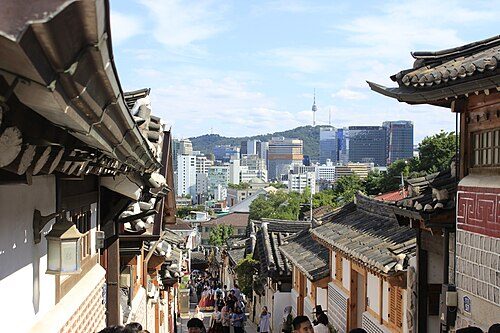
Bukchon Hanok Village
북촌한옥마을
Seoul’s densest cluster of lived-in hanok: 1920s-30s townhouses on old aristocratic land between two palaces, with visiting hours enforced.
Overnight staysLived in
 Seoul · City hanok quarter
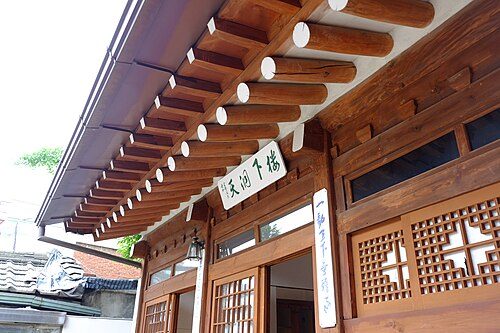
Seochon Village
서촌
The lanes west of Gyeongbokgung: small 20th-century hanok, a painter’s house, a restored ondol house and the valley Jeong Seon painted.
Overnight staysLived in
 Seoul · Open-air museum
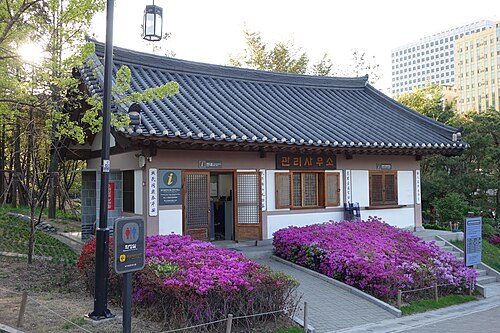
Namsangol Hanok Village
남산골한옥마을
Five late-Joseon Seoul houses moved to the foot of Namsan in 1998, from a master carpenter’s home to a royal in-law’s ancestral hall.
 Seoul · Palace residence
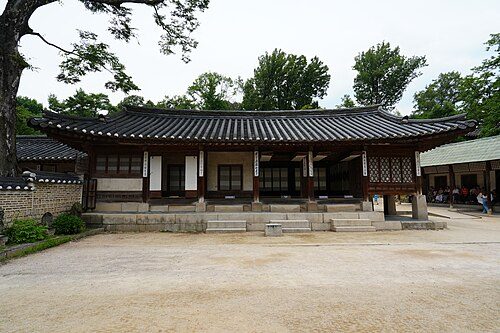
Yeongyeongdang
창덕궁 연경당
A scholar-official’s house built inside a royal garden: unpainted, with separate men’s and women’s courts, from the 1820s.
UNESCO
 Seoul · Palace residence
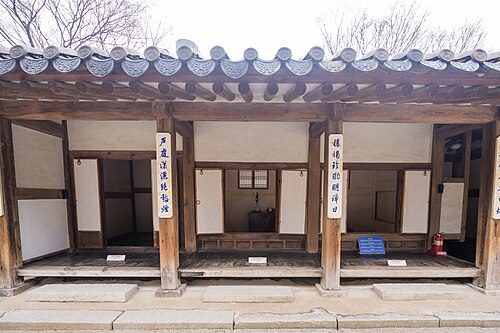
Unhyeongung Royal Residence
서울 운현궁
The Regent’s house where King Gojong grew up and married: three surviving 1860s halls, free to enter, a minute from Anguk Station.
 Gyeonggi · Open-air museum
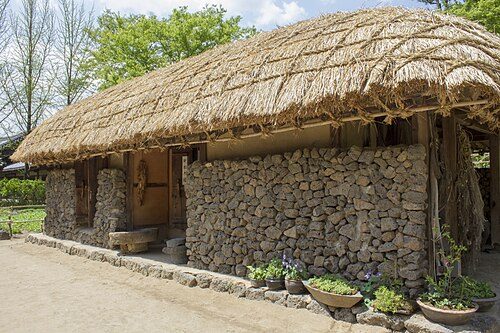
Korean Folk Village
한국민속촌
An open-air museum opened in 1974: about 270 relocated and rebuilt houses from across Korea, from thatched farmhouses to a yangban estate.
 Gangwon · House and estate
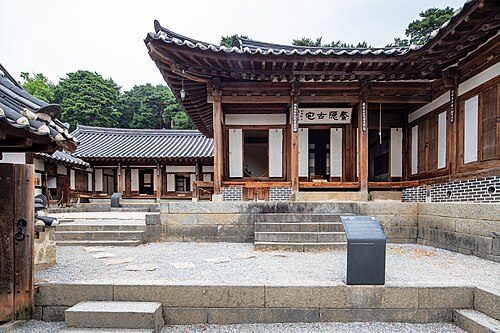
Seongyojang House
강릉 선교장
A Gangneung gentry estate that grew for two centuries: low women’s house, high men’s hall, lotus-pond pavilion and a hanok stay.
Overnight staysLived in
 Chungcheong · Historic village
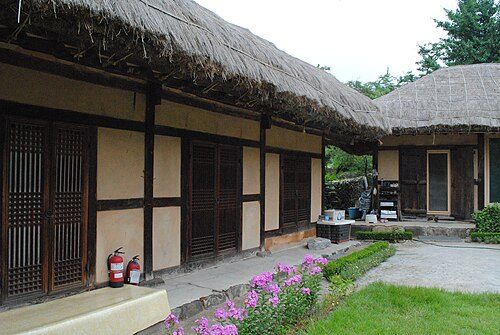
Oeam Folk Village
아산 외암마을
A lived-in Yean Yi clan village under Seolhwasan: stone-walled lanes, thatched farmhouses and gentry houses with gardens fed by a mountain stream.
Overnight staysLived in
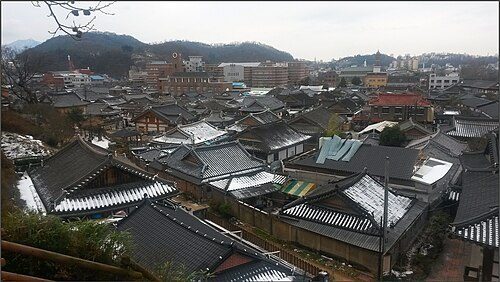 Jeolla · City hanok quarter
Jeonju Hanok Village
전주한옥마을
Some 735 hanok in Gyo-dong and Pungnam-dong, built by Koreans from the 1910s-30s beside the shrine of Joseon’s founder.
Overnight staysLived in
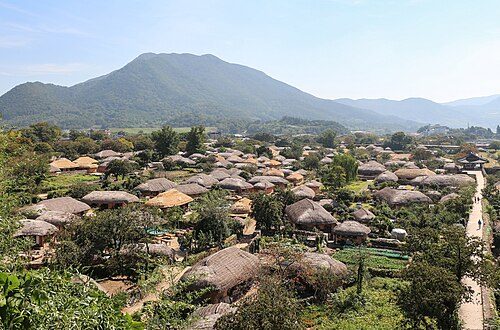 Jeolla · Historic village
Naganeupseong Walled Town
순천 낙안읍성
An inhabited Joseon county town inside its 1.4 km stone wall, with thatched southern houses, a clerk’s home and an old tavern.
Overnight staysLived in
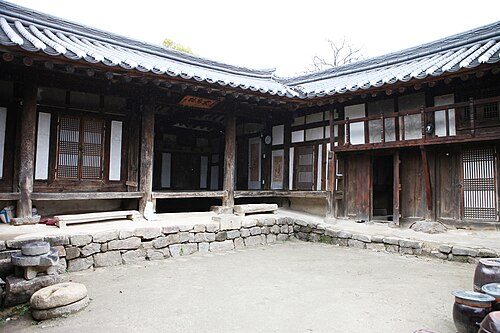 Jeolla · House and estate
Gurye Unjoru Historic House
구례 운조루 고택
A 1776 gentry house sited by pungsu below Jirisan, with a rice chest anyone could open and chimneys kept low out of tact.
Lived in
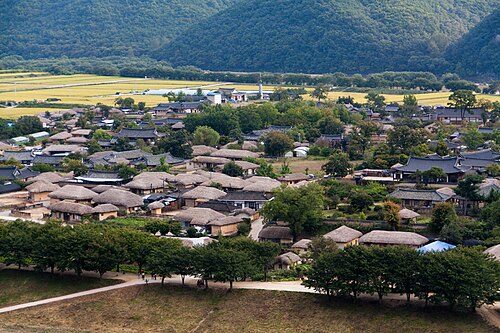 Gyeongsang · Historic village
Hahoe Folk Village
안동 하회마을
The Pungsan Ryu clan’s village in a loop of the Nakdong: tiled head houses ringed by thatch, all turned to face the river.
UNESCOOvernight staysLived in
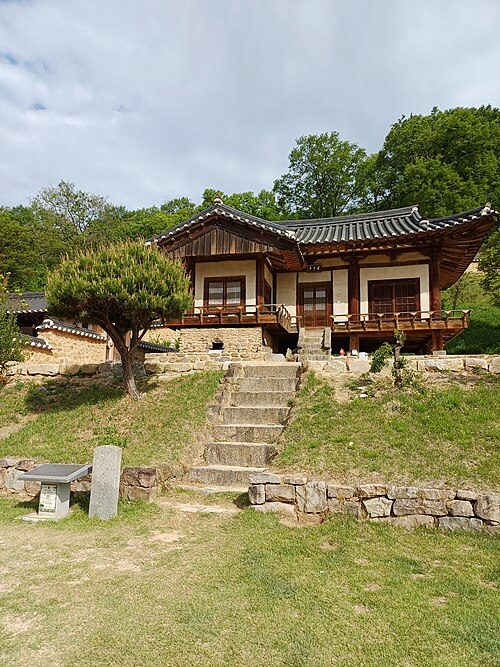 Gyeongsang · House and estate
Imcheonggak House
안동 임청각
A 1519 head house on the Nakdong, home of independence leader Yi Sang-ryong, cut through by a colonial railway now removed.
Overnight staysLived in
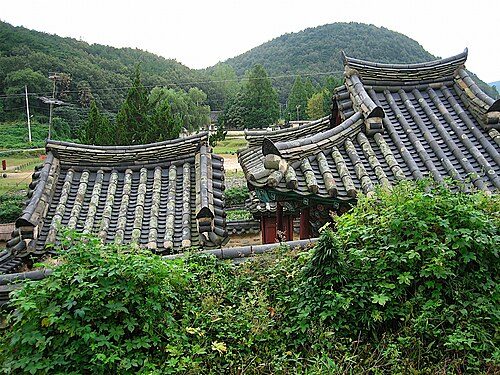 Gyeongsang · Historic village
Yangdong Village
경주 양동마을
Two clans, one valley: Son and Yi head houses on the ridges, thatched homes below, and a 1459 house where two scholars were born.
UNESCOOvernight staysLived in
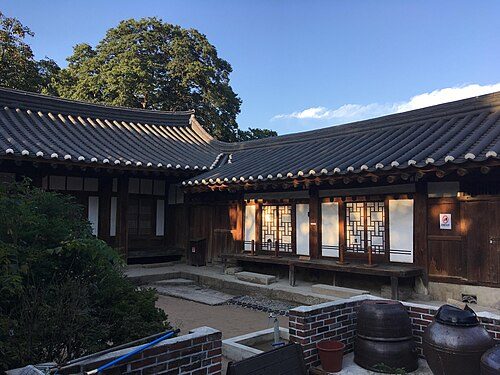 Gyeongsang · Historic village
Gyeongju Gyochon Traditional Village
경주 교촌마을
The ‘school village’ beside Gyeongju’s Confucian academy, home of the Choi family famed for generations of wealth and charity.
Overnight staysLived in
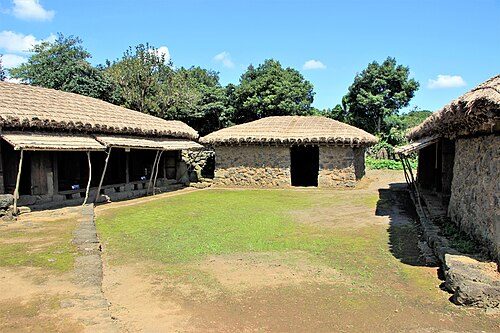 Jeju · Historic village
Seongeup Folk Village
제주 성읍마을
Jeju’s old county seat: thatched houses roped down against the wind, basalt walls, curving olle lanes and jeongnang gate poles.
Lived in
No place matches all of those. Try fewer filters.
At a glance
| Place | Region | Type | Heritage status | Best season | Stay |
|---|---|---|---|---|---|
| Bukchon Hanok Village 북촌한옥마을 | Seoul | City hanok quarter | none (residential hanok district; Seoul hanok policy area and Jongno-gu special management area). Individual houses such as Baek In-je House are Seoul-designated folklore heritage. | Spring, Autumn | Yes |
| Seochon Village 서촌 | Seoul | City hanok quarter | none (residential hanok district under Seoul’s hanok policy). Individual buildings carry their own listings, e.g. the Park No-su house as Seoul-designated cultural heritage material. | Spring, Autumn | Yes |
| Namsangol Hanok Village 남산골한옥마을 | Seoul | Open-air museum | Seoul Metropolitan City Folklore Cultural Heritage (each of the original houses, designated 1977); the village itself is a municipal park | Spring, Autumn, Winter | – |
| Yeongyeongdang 창덕궁 연경당 | Seoul | Palace residence | Treasure (designated 16 August 2012; numbered No. 1770 before designation numbers were dropped); UNESCO 1997 ‘Changdeokgung Palace Complex’ | Autumn, Spring | – |
| Unhyeongung Royal Residence 서울 운현궁 | Seoul | Palace residence | Historic Site (designated 22 November 1977; numbered No. 257 before designation numbers were dropped) | Spring, Autumn | – |
| Korean Folk Village 한국민속촌 | Gyeonggi | Open-air museum | none (private open-air museum) | Spring, Autumn | – |
| Seongyojang House 강릉 선교장 | Gangwon | House and estate | National Folklore Cultural Heritage (Korea Heritage Service record dates the designation 20 April 1967; numbered No. 5 before designation numbers were dropped) | Spring, Summer, Autumn | Yes |
| Oeam Folk Village 아산 외암마을 | Chungcheong | Historic village | National Folklore Cultural Heritage (village designated 7 January 2000; numbered No. 236 before designation numbers were dropped) | Autumn, Spring | Yes |
| Jeonju Hanok Village 전주한옥마을 | Jeolla | City hanok quarter | none for the district (municipal hanok preservation district since 1977). Within it: Gyeonggijeon (Historic Site; main hall a Treasure), Jeonju Hyanggyo (Historic Site), Jeondong Cathedral (Historic Site), Omokdae (provincial monument). | Spring, Autumn | Yes |
| Naganeupseong Walled Town 순천 낙안읍성 | Jeolla | Historic village | Historic Site (designated 14 June 1983; numbered No. 302 before designation numbers were dropped); nine houses are National Folklore Cultural Heritage (1979) | Autumn, Spring | Yes |
| Gurye Unjoru Historic House 구례 운조루 고택 | Jeolla | House and estate | National Folklore Cultural Heritage (designated 25 November 1968; numbered No. 8 before designation numbers were dropped) | Spring, Autumn | – |
| Hahoe Folk Village 안동 하회마을 | Gyeongsang | Historic village | National Folklore Cultural Heritage (designated January 1984; numbered No. 122 before designation numbers were dropped); UNESCO 2010 ‘Historic Villages of Korea: Hahoe and Yangdong’ | Autumn, Spring | Yes |
| Imcheonggak House 안동 임청각 | Gyeongsang | House and estate | Treasure (designated 21 January 1963; numbered No. 182 before designation numbers were dropped) | Autumn, Spring | Yes |
| Yangdong Village 경주 양동마을 | Gyeongsang | Historic village | National Folklore Cultural Heritage (designated 24 December 1984; numbered No. 189 before designation numbers were dropped); UNESCO 2010 ‘Historic Villages of Korea: Hahoe and Yangdong’ | Spring, Autumn | Yes |
| Gyeongju Gyochon Traditional Village 경주 교촌마을 | Gyeongsang | Historic village | none for the village. Gyeongju Choi Buja-daek is National Folklore Cultural Heritage (designated 27 May 1971; numbered No. 27 before designation numbers were dropped); Gyeongju Hyanggyo’s Daeseongjeon and Myeongnyundang are Treasures; Gyodong Beopju is National Intangible Heritage. | Spring, Autumn | Yes |
| Seongeup Folk Village 제주 성읍마을 | Jeju | Historic village | National Folklore Cultural Heritage (designated 12 June 1984; numbered No. 188 before designation numbers were dropped) | Spring, Autumn | – |