
Staying in a hanok
A night on a warm floor behind paper doors is the best way to understand how these houses work. It is also not a hotel. Here is what to expect.
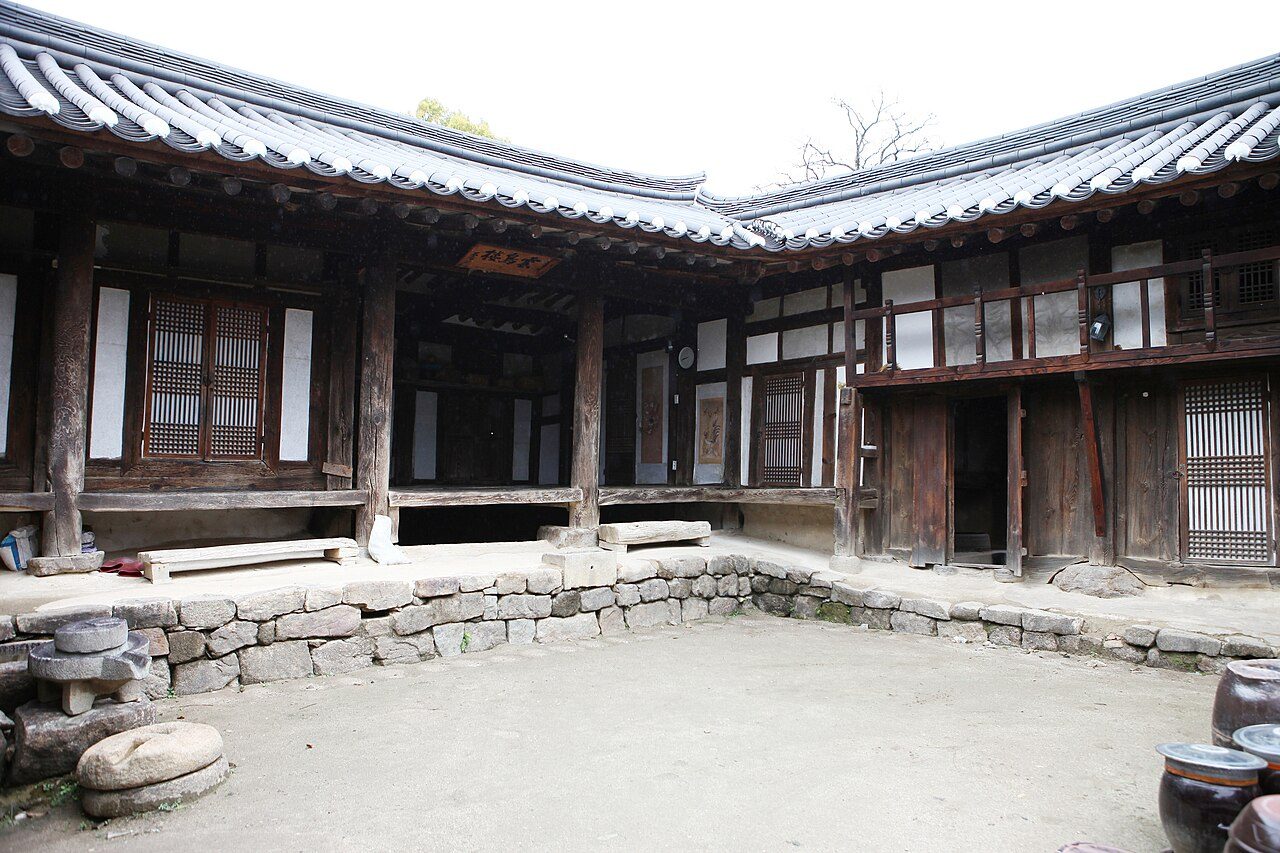
Sleeping in a hanok is the best way to understand one. A daytime visit shows you the roofs and the courtyards; a night shows you the warm floor, the paper doors glowing in the morning, and how close together everyone lives. It is also a different kind of night from a hotel, and knowing what to expect makes the difference between a memorable stay and an uncomfortable one.
Hanok stays range widely. The Korea Tourism Organization’s English guide to hanok accommodation describes everything from large old country houses to small city ones, and from strictly traditional rooms, where you sleep on bedding laid on the floor, to modernised rooms with beds and en-suite bathrooms. Facilities vary so much that its main advice is simply to check before you book. This guide explains the types of stay, what a night is like, and how to choose. It does not recommend or rank individual guesthouses.
What a night is like
In a traditional room there is usually no bed. When it is time to sleep you, or your host, take the bedding from a cupboard and lay it on the floor: a yo (요), a thin padded mattress, and an ibul (이불), a quilt, with a firm pillow. In the evening the room is a sitting room with floor cushions, bangseok (방석), and perhaps a low table; at night it becomes a bedroom; in the morning the bedding goes back in the cupboard. VisitKorea notes that many hanok stays use mats and blankets this way, while others, especially newer ones, have beds.
The floor is the heater. In winter an ondol room is warmed from below, either by a traditional firebox and flues or, far more often today, by hot-water pipes under the floor. The floor is warmest at one end, and you will sleep best with your bedding where the warmth suits you. The air above the floor can be cooler than you are used to, because paper doors and old walls let in draughts.
Mornings start early. Light comes straight through the paper of the doors, and in a village you will hear the household and the neighbours moving about. Many stays serve breakfast, often a Korean meal of rice, soup and side dishes, and some offer activities such as tea, cooking or crafts; check what is included.
Bathrooms
Old hanok had no indoor bathrooms; toilets were outbuildings. Hanok stays today have modern toilets and showers, but how they are arranged varies a great deal. Some rooms are en-suite, with a bathroom built into a corner of the building or an added wing; in others the bathroom is shared, across the courtyard or along the maru. Adding bathrooms takes space from small rooms, and designers of recent hanok stays describe it as one of the main trade-offs.
In heritage houses the rules are stricter. The Korea Heritage Service has relaxed its guidelines so that nationally designated folk heritage houses can add or expand bathrooms and kitchens while the historic structure is preserved, but a historic house may still have only a shared bathroom in an outbuilding. If an en-suite bathroom matters to you, ask directly and ask where it is.
Quiet hours and residents
Hanok are not soundproof. Rooms are separated by paper doors and thin walls, and they open onto a shared courtyard, so voices and footsteps carry. Most hosts ask for quiet in the evening; keep conversations low after dark and early in the morning.
Many hanok stays are in neighbourhoods where people live. In Seoul’s Bukchon, tourism became such a burden for residents that the Jongno district created a ‘red zone’ where tourists may enter only between 10 a.m. and 5 p.m., with fines for visiting outside those hours. Overnight guests are exempt from the fine, but not if they are found sightseeing in the zone outside the permitted hours. Treat the alleys as someone’s home: do not linger at gates, photograph through doorways or try doors that are not yours.
Choosing a type of stay
City hanok guesthouses are the most common: small houses in Seoul’s Bukchon and Seochon, in Jeonju’s hanok village or in Gyeongju, converted into a few rooms with modern bathrooms. They are convenient, usually modernised, and closest to a small hotel in feel.
Heritage house stays put you in a historic building, sometimes a gotaek (고택), an old house that has stood for generations, or a jongtaek (종택), the head house of a lineage, where the family may still live. Since 2020 the Korea Heritage Service has supported cultural programmes and overnight stays in heritage houses; by 2026 the programme covered 48 houses, 18 of which offered accommodation. These stays are the most atmospheric and the least hotel-like: expect older rooms, floor bedding, shared facilities in some cases, and hosts who may tell you the house’s history.
Village stays in places such as Hahoe in Andong or Yangdong in Gyeongju, or in the folk villages of Naganeupseong and Seongeup, mean sleeping in a house within a living village. They are quiet at night once day visitors leave, and you see the village at hours most visitors miss.
Certification. From 2017 the Korea Tourism Organization merged its earlier separate certifications, including Goodstay, Korea Stay and the dedicated Hanok Stay mark, into a single scheme called Korea Quality (한국관광 품질인증), run with the Ministry of Culture, Sports and Tourism. Registered hanok experience businesses (hanok cheheomeop, 한옥체험업) can apply; assessment includes document checks, site visits and unannounced inspections, and certification lasts three years. Certified places may show the Korea Quality mark in their name or listing. The old ‘Hanok Stay’ certification no longer exists as a separate scheme.
Booking tips
Start from official sources. The Korea Tourism Organization’s hanok accommodation page explains the kinds of stay and points to the regions with the most choice, and its accommodation search lists places by area. City and provincial tourism sites for Seoul, Jeonju, Gyeongju and Andong also list registered hanok stays. Book through those listings or the house’s own site where you can, so you are dealing with a registered business.
Before booking, ask: Is the room heated through the floor, and how is it heated? Is there air-conditioning? Is the bathroom private or shared, and where is it? Is bedding on the floor or is there a bed? How many sets of bedding come with the room, and is there a charge for extra guests? What are check-in and check-out times, and is there someone on site in the evening? Is breakfast included? For a heritage house, ask whether the family lives there and whether there are rules about the shrine or certain buildings.
If you need help in English, the Korea Travel Hotline, 1330, can answer questions in several languages.
Seasons
Winter is when a hanok makes most sense. The heated floor is the whole point of an ondol room, and lying on a warm floor while frost forms outside is the experience the house was built for. Bring warm layers for the walk across the yard to a shared bathroom.
Summer is the season of the maru. Doors open, air moves through the house and you can sit on the wooden floor in the evening. It is also the season of mosquitoes and humidity: paper doors and gaps let insects in, so check whether there are screens or a mosquito net, and whether the room has an air-conditioning unit, which most modernised stays now have.
Spring and autumn are the most comfortable and the busiest. Autumn is when the paper on doors was traditionally renewed, so you may see fresh white doors.
Accessibility
Be realistic. Traditional hanok are hard for anyone who cannot easily get down to and up from the floor, or who uses a wheelchair. You step up onto a stone and then onto the maru, rooms have raised thresholds, sleeping is on the floor, and in many houses the bathroom is across an uneven courtyard. Historic houses are protected, so ramps and rails are rarely possible.
Some modernised hanok stays have rooms with beds, chairs and an en-suite bathroom on the same level, which removes most of the difficulty except the step up into the building. If mobility is a concern, ask for photographs of the room, the bathroom and the route between them, and ask specifically about steps and thresholds. VisitKorea notes that rooms with beds are available at some hanok stays.
Etiquette
- Take your shoes off at the stone step before stepping up onto the toenmaru or into a room, and leave them on the ground, toes pointing out. The wooden floors and rooms are living space and are kept clean; the stone step, the seokdan or datdol, is where shoes stay.
- Never walk on the maru in shoes, even for a moment. The wooden hall was traditionally treated as the cleanest place in the house, used for rites and receiving guests.
- Sit on the floor cushions, not on the bedding or the low table. Bedding is for sleeping and is folded away in the day; tables are for food and tea.
- Keep your voice down, especially after dark and early in the morning. Paper doors and thin walls carry sound to every room around the courtyard.
- Do not lean on, push against or put fingers through lattice doors. The paper tears easily and the lattice is delicate.
- Open and close sliding and hinged doors gently, holding the frame, not the paper. Old frames and hinges are fragile.
- No candles, incense, cigarettes or cooking flames in the rooms; follow the host’s rules about fire exactly. The house is timber, paper and straw or tile on wood. VisitKorea’s hanok guide singles out care with fire.
- Ask before entering any building that is not part of your room, especially a shrine. In heritage houses the shrine and family quarters may be private and ritually important.
- In village stays, keep to lanes and do not enter yards or photograph residents without asking. Hahoe, Yangdong, Bukchon and similar places are homes; Bukchon now restricts tourist hours to protect residents.
- Fold your bedding in the morning if the host asks, and leave the room as you found it. In a traditional room the same floor is bedroom by night and sitting room by day.
What to bring
- Socks or slippers for wooden floors, which can be cold in the morning
- Shoes that slip on and off easily
- Layers for winter: the floor is warm but the air may not be
- Insect repellent in summer
- Earplugs if you are a light sleeper
- A small torch for the walk to a shared bathroom at night
- Your own toiletries and towel unless the listing says they are provided
Questions
Is the floor hard?
Firmer than a bed. A yo is a thin padded mattress, and some stays will give you two. If you are not used to it, ask for an extra yo or book a room with a bed; many modernised hanok stays have them.
Is there heating and air-conditioning?
Almost all hanok stays heat through the floor in winter, usually now with hot-water pipes rather than a wood fire. Most modernised stays also have an air-conditioning unit for summer. Historic houses may be more basic, so ask.
Are bathrooms shared?
It depends on the house. City guesthouses and newer stays often have private bathrooms; heritage houses and village stays more often share one, sometimes across the courtyard. Ask before you book.
Can I stay with children?
Usually, yes, and children often love sleeping on the floor. But paper doors tear easily, rooms are close together and voices carry, so check the house rules and be ready to keep things calm in the evening.
Is it accessible for people who can’t sit or sleep on the floor?
Traditional rooms are difficult: you step up into the building, sit and sleep on the floor, and may cross a yard to the bathroom. Choose a room with a bed and an en-suite bathroom, and ask for photos of steps and thresholds.
Will I be able to see a real wood-fired ondol?
Sometimes. A few heritage houses still light a firebox, especially in winter, but most hanok stays now use modern floor heating. If it matters to you, ask the host.
Do I need to speak Korean?
Not necessarily. City guesthouses often have hosts who speak some English. In village and heritage stays a translation app helps, and the 1330 Korea Travel Hotline can help with phone calls.
How do I know a stay is properly registered?
Book through official tourism listings or the house’s own site. A Korea Quality mark shows the place has been assessed under the national certification scheme.
Sources
- Hanok Accommodations, Korea Tourism Organization (VisitKorea) (read 15 November 2026)
- Accommodations (travel information), Korea Tourism Organization (VisitKorea) (read 15 November 2026)
- [카드뉴스] 국가가 인증한 곳, 안심하고 즐기자! 한국관광공사 한국관광품질인증, Ministry of Culture, Sports and Tourism (read 15 November 2026)
- 한국관광 품질인증제 시행 (launch of Korea Quality), Sidae (read 15 November 2026)
- Could old homes be Korea’s new hot stay?, Korea JoongAng Daily (read 15 November 2026)
- Hanok stay playbook: Designing homes where the past and present can naturally coexist, Korea JoongAng Daily (read 15 November 2026)
- Starting March, Bukchon Tourist Visit Hours Restricted... Fines for Violations, Asia Business Daily (read 15 November 2026)
- Why Seoul’s Bukchon Hanok Village now closes to tourists after 5 pm, The Korea Times (read 15 November 2026)
- 마루 (Maru), Encyclopedia of Korean Culture, Academy of Korean Studies (read 15 November 2026)
- 구들 (Gudeul), Encyclopedia of Korean Culture, Academy of Korean Studies (read 15 November 2026)