

Jeolla · Suncheon, Jeonnam-Gwangju (formerly South Jeolla Province) · Historic village
Naganeupseong Walled Town 순천 낙안읍성
Suncheon Naganeupseong
An inhabited Joseon county town inside its 1.4 km stone wall, with thatched southern houses, a clerk’s home and an old tavern.
Overnight staysLived in
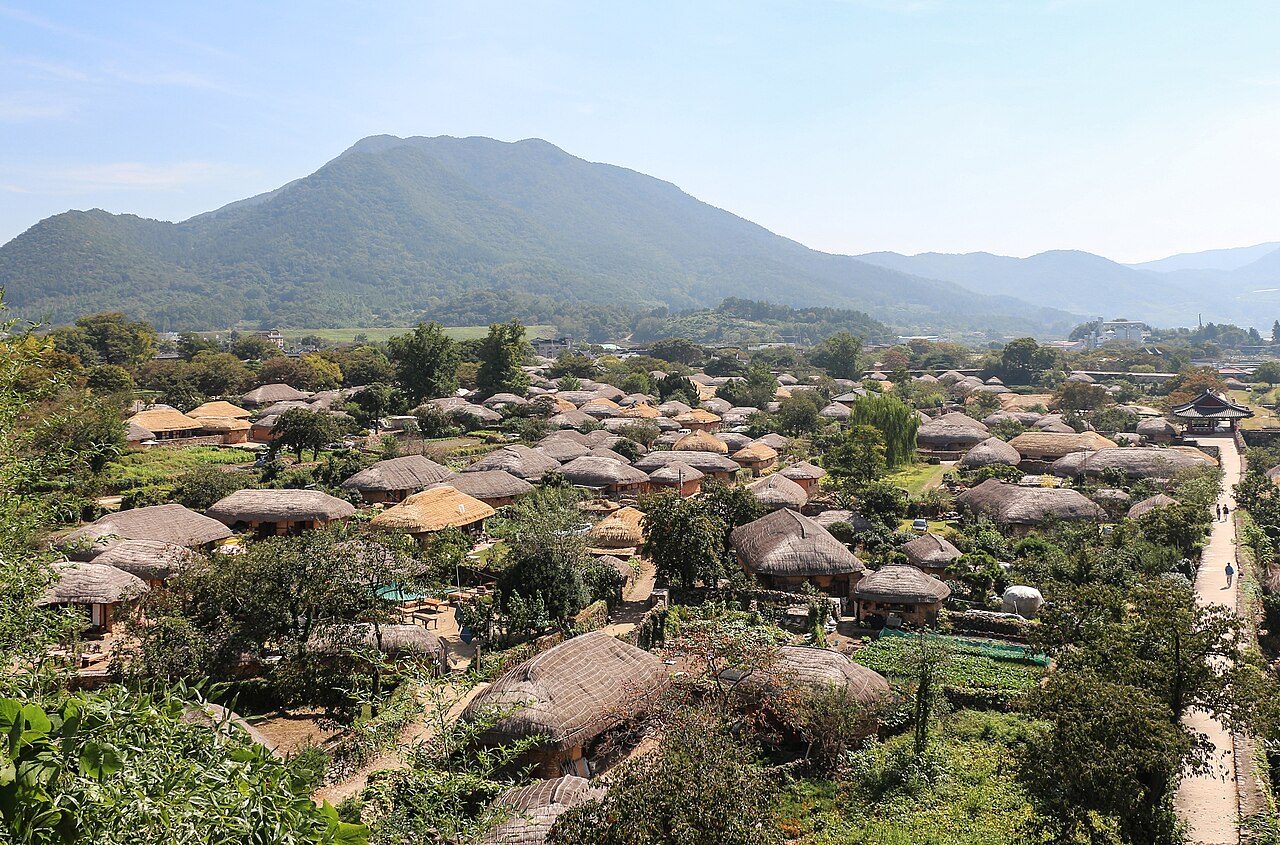
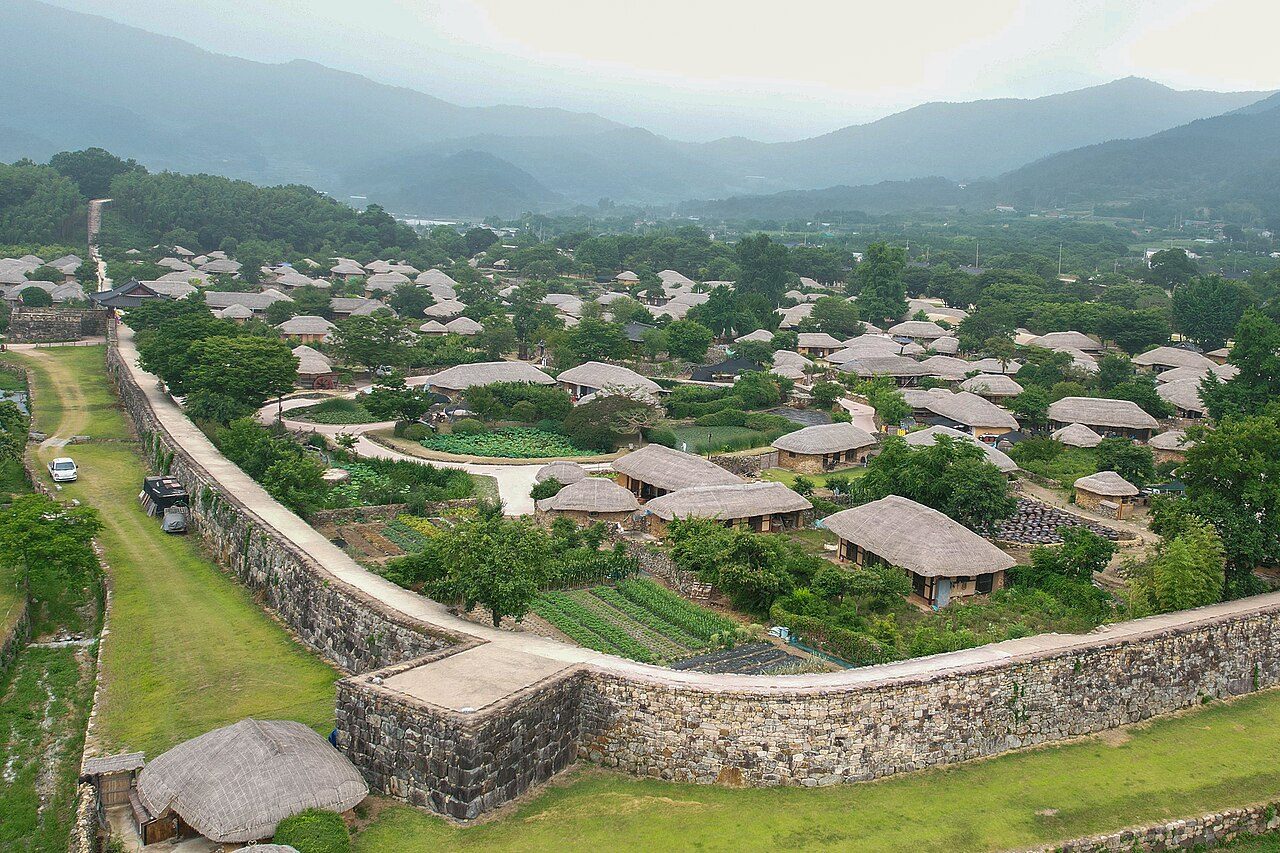
Naganeupseong is a whole Joseon county seat, an eupseong (읍성) or walled administrative town, that still has people living inside its walls. A square circuit of stone, about 1,410 metres long and around four metres high, encloses lanes of thatched houses and vegetable plots, entered by three gates, out in the countryside of Nagan-myeon in Suncheon.
It is the best place in Korea to see choga (초가), the rice-straw-roofed houses in which most Koreans lived until the 20th century, in their southern form and in their original setting. The houses are small, often only three bays, and the Korea Heritage Service records the details that mark them as southern: wide kitchens, small open verandas, stoves that vent through a separate chimney and jar terraces sheltered by low walls.
What to look at
The wall walk 성곽
Climb onto the wall near a gate and walk part of the circuit. From above you can read the town plan: three gates, the streets joining them, and the thatched houses packed into their walled plots. The stone facing built from 1424 replaced the original earth rampart.
The clerk’s house (Ibang-daek) 이방댁
A local functionary’s house next to the old prison site, and the most carefully finished house in the town. Main wing and lower wing form an L around a yard; the main wing runs kitchen, main room, wooden floor, second room. Note how wide the kitchen bay is compared with the rooms: a ‘three-bay thatched house’, the classic modest home.
The tavern (Jumak-jip) 주막집
The first thatched house on the street from the south gate, and the only one in the town on a 田-shaped plan, chosen because the plot was cramped. Two rooms, a kitchen and a shop room behind; a long shelf board on the upper walls makes room for goods in a tiny house.
The L-shaped shop house ㄱ자집
On the street from the east gate, a shop and dwelling combined. The heritage record points out the stove whose smoke is drawn off to a chimney and the jar terrace enclosed by a low thick wall, both habits of the southern coast. Its tile roof was later replaced with slate.

History
The coast of Jeolla suffered repeated raids by Japanese pirates from the late Goryeo period. According to the Korea Heritage Service, Nagan’s first wall was raised in earth in 1397, the sixth year of King Taejo, and the Veritable Records of King Sejong record that it was rebuilt in stone and enlarged over several years from 1424. Gates on the east, west and south connect to the main streets, and sections of wall project outward so that defenders could cover the approaches.
Nagan remained a county seat through the Joseon period, and its town plan survives far better than most: the heritage record calls it one of the best-preserved eupseong and notes that it keeps its early Joseon form. The town was designated a Historic Site in 1983, and nine of its houses, from a clerk’s house to a roadside tavern, were designated National Folklore Cultural Heritage in 1979.
Unlike a museum village, the houses are homes. Families live in many of them, some run inns, restaurants or craft workshops, and the ones designated as heritage may be closed when the owners need privacy.
Getting there
KTX/train to Suncheon Station, then Suncheon city bus 61 or 68 (or 63 from the bus terminal), about 35-50 min
Take a KTX or other Korail train to Suncheon Station. Suncheon city buses 16 and 61 run from Suncheon Station via the intercity bus terminal to Naganeupseong; buses 63 and 68 run from the terminal area. Services are infrequent, so plan the return before you go.
This route list comes from a 2015 posting of Suncheon’s tourist information; Suncheon’s own site refused connections when we checked, so confirm the current numbers on arrival.
Route checked 15 November 2026 against: 낙안읍성 (tourist information posting, 2015) (Gangnam-gu Office (Suncheon City information)); 낙안읍성 – 시내버스 (Suncheon City). Bus numbers and stops change: check the official page before you set off.
When to go
SpringSummerAutumnWinter
Spring and autumn are the most comfortable seasons for walking the wall. Hours are longest from May to September. The town is lived in all year, so visit quietly whatever the season.
On screen
- Masquerade (2012, film): Okyeonjeongsa, Andong; Naganeupseong walled town, Suncheon
- Dae Jang Geum (Jewel in the Palace) (2003, drama): Naganeupseong walled town, Suncheon
- The Moon Embracing the Sun (2012, drama): Naganeupseong walled town, Suncheon
Sources
- 순천 낙안읍성, Korea Heritage Service (National Heritage Portal) (read 15 November 2026)
- Naganeupseong Walled Town, VisitKorea (Korea Tourism Organization) (read 15 November 2026)
- 순천 낙안읍성 이방댁, Korea Heritage Service (National Heritage Portal) (read 15 November 2026)
- 순천 낙안읍성 주막집, Korea Heritage Service (National Heritage Portal) (read 15 November 2026)
- 순천 낙안읍성 ㄱ자집, Korea Heritage Service (National Heritage Portal) (read 15 November 2026)
- 순천 낙안읍성 들마루집, Korea Heritage Service (National Heritage Portal) (read 15 November 2026)
- 낙안읍성 (tourist information posting, 2015), Gangnam-gu Office (Suncheon City information) (read 15 November 2026)