

Seoul · Jung-gu, Seoul · Open-air museum
Namsangol Hanok Village 남산골한옥마을
Namsangol Hanongmaeul
Five late-Joseon Seoul houses moved to the foot of Namsan in 1998, from a master carpenter’s home to a royal in-law’s ancestral hall.
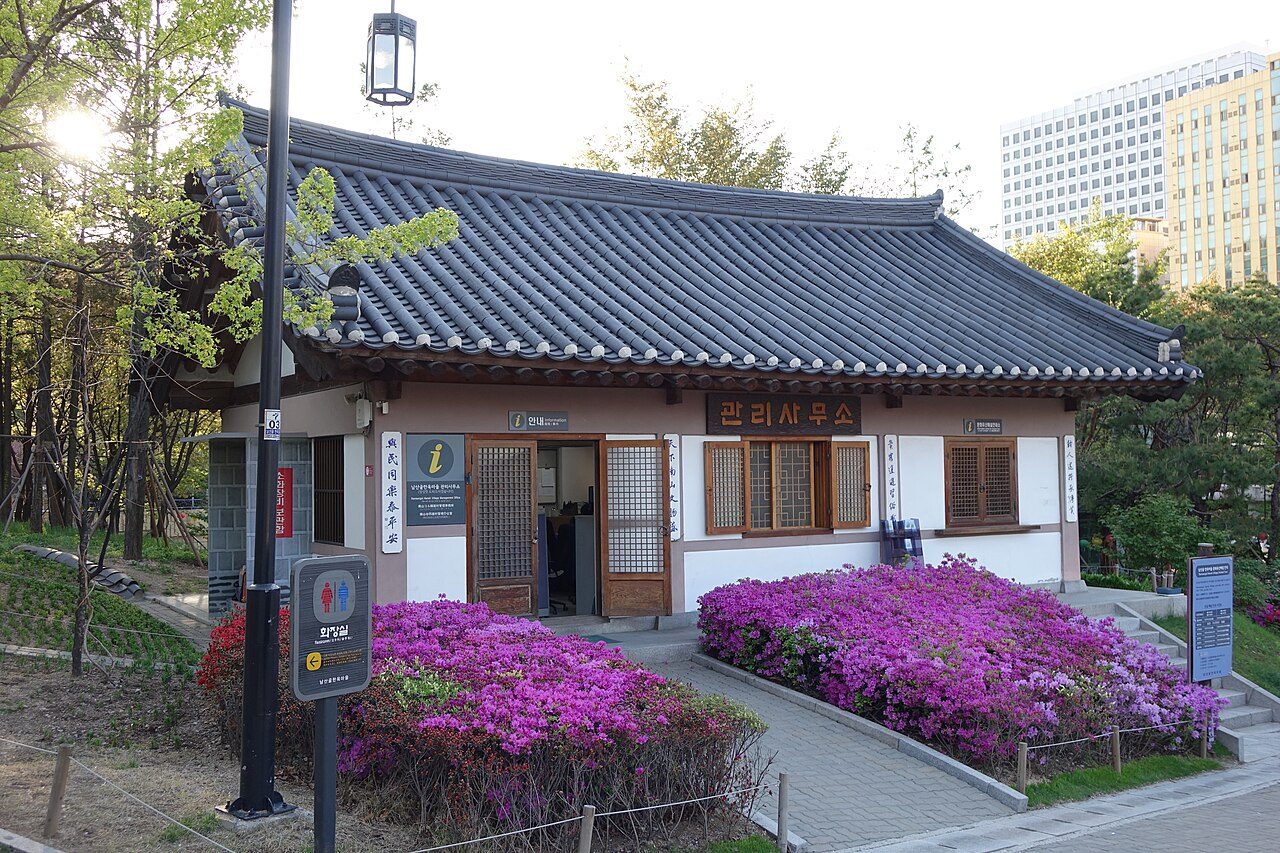
Namsangol is an open-air collection of five Seoul hanok (한옥), dismantled from different parts of the city and rebuilt side by side at the northern foot of Namsan mountain. Seoul opened it on 18 April 1998, together with a landscaped garden, a pond and a pavilion, on a valley that was a summer haunt in the Joseon period. Entry is free and nobody lives here, which makes it the opposite of Bukchon: you may walk into the courtyards, look into the rooms and take your time.
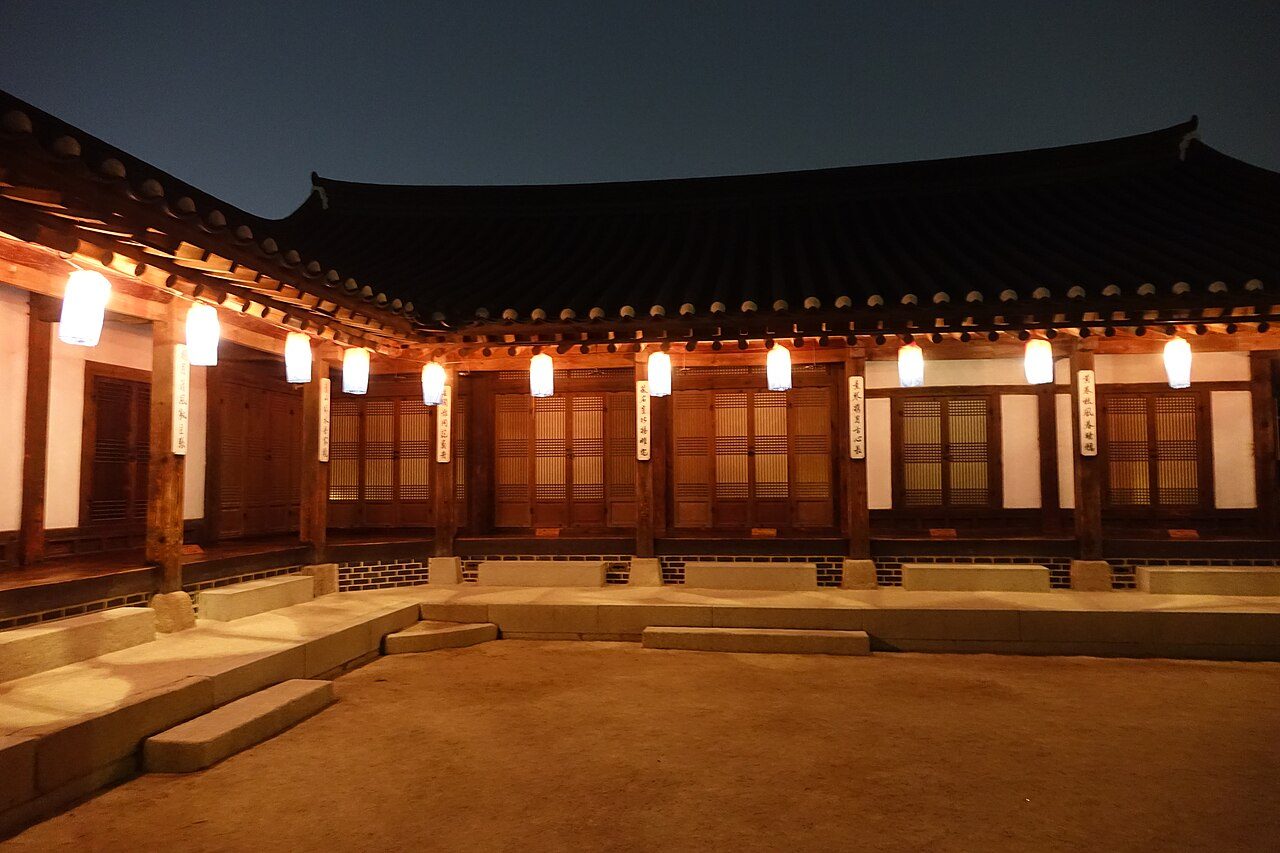
Its real value is comparison. The five houses span the social range of late-Joseon Seoul, from a royal father-in-law and a branch of the powerful Min clan to a military officer and the head carpenter who helped rebuild Gyeongbokgung Palace. Seen together they show what rank bought in a Seoul house: more wings, a separate sarangchae (사랑채), taller stone platforms and finer timber.
What to look at
House of master carpenter Yi Seung-eop 삼각동 도편수 이승업 가옥
Built in the 1860s by the chief carpenter of the Gyeongbokgung reconstruction. The anchae (안채) is ㄱ-shaped with the kitchen running along one arm. Look at the roof: one slope is longer than the other, a form the heritage record calls unknown elsewhere in Seoul.
Jaesil of Yun Taek-yeong 제기동 해풍부원군 윤택영 재실
Not a family home but a house for ancestral rites, and built to feel like one. The shrine sits two steps higher than the main house, and the heritage record notes the timber for the original shrine was said to come from dismantled palace buildings.
Kim Chun-yeong house 삼청동 오위장 김춘영 가옥
A modest 1890s house with a ㄷ-shaped anchae around a central daecheong (대청), the standard Seoul arrangement. Compare its single small sarangchae with the jaesil next door to see the gap between a mid-ranking officer and a royal in-law.
Min family house 관훈동 민씨 가옥
Only part of the main house and the gate wing survived to be moved; the family’s original compound in Gwanhun-dong had six tiled buildings and a Western-style two-storey house in 1936. A reminder that what you see here is a fragment.
Traditional garden and Cheonujak 천우각
The pavilion beside the restored stream and Cheonghakji pond reflects the Joseon habit of gathering by water in summer to write verse. The garden is open around the clock even when the houses are closed.

History
The Pildong valley here was known in Joseon times as Cheonghakdong and counted among the five beauty spots of the capital, a place to escape summer heat. The present park was laid out by the Seoul Metropolitan Government and opened in 1998, with the stream channel, native Namsan trees, a pond and a pavilion restored around it.
The houses were all designated Seoul folklore heritage in 1977, before they were moved. They are the ancestral-ritual house (jaesil) of Yun Taek-yeong, father-in-law of Emperor Sunjong, moved from Jegi-dong in 1996; part of a Min family compound from Gwanhun-dong, moved between 1995 and 1998; the 1860s house of Yi Seung-eop, head carpenter (dopyeonsu) during the rebuilding of Gyeongbokgung; the 1890s house of Kim Chun-yeong, an officer of the Five Commands, from Samcheong-dong; and a Yun family house from Ogin-dong in Seochon.
VisitKorea notes that four houses were rebuilt with their original timbers but one was too decayed to reuse; Seoul’s tourism pages explain that the Ogin-dong house in Seochon was too fragile to move and was reproduced here instead. Treat that one as a faithful copy rather than an original.
In 1994, for the 600th anniversary of Seoul as capital, the city buried a time capsule of 600 objects on the site. It is due to be opened on 29 November 2394.
Getting there
Seoul Subway Lines 3 and 4 to Chungmuro Station, Exit 3 or 4, a few minutes’ walk
Take Seoul Subway Line 3 or Line 4 to Chungmuro Station. Seoul’s own page gives Exits 3 and 4; Visit Seoul’s current listing names Exit 4, about 300 m from the gate. The entrance is on Toegye-ro 34-gil, signposted from the station.
From the village you can walk up through Namsan park towards N Seoul Tower, or take Line 3 north to Anguk for Bukchon and Unhyeongung.
Route checked 15 November 2026 against: 남산골한옥마을 (Seoul Metropolitan Government); Namsangol Hanok Village (Visit Seoul (Seoul Tourism Organization)). Bus numbers and stops change: check the official page before you set off.
When to go
SpringSummerAutumnWinter
Pleasant in spring and autumn, and lively over Seollal and Chuseok (dates follow the lunar calendar, usually January-February and September-October), when the village runs seasonal games and events. The houses stay open into the evening, so it also works as a late visit after other sites have closed.
Sources
- Namsangol Hanok Village, VisitKorea (Korea Tourism Organization) (read 15 November 2026)
- 남산골한옥마을, Seoul Metropolitan Government (read 15 November 2026)
- 피서지로 이름난 필동, ‘남산골한옥마을’에서 타임슬립해 볼까~, Seoul Metropolitan Government (Mediahub) (read 15 November 2026)
- Namsangol Hanok Village, Visit Seoul (Seoul Tourism Organization) (read 15 November 2026)
- 제기동해풍부원군윤택영재실, Korea Heritage Service (National Heritage Portal) (read 15 November 2026)
- 관훈동 민씨 가옥, Korea Heritage Service (National Heritage Portal) (read 15 November 2026)
- 삼각동 도편수 이승업 가옥, Korea Heritage Service (National Heritage Portal) (read 15 November 2026)
- 삼청동오위장김춘영가옥, Korea Heritage Service (National Heritage Portal) (read 15 November 2026)
- Seochon (walking tour), Visit Seoul (Seoul Tourism Organization) (read 15 November 2026)