

Seoul · Jongno-gu, Seoul · City hanok quarter
Seochon Village 서촌
Seochon
The lanes west of Gyeongbokgung: small 20th-century hanok, a painter’s house, a restored ondol house and the valley Jeong Seon painted.
Overnight staysLived in
Seochon, the ‘western village’, fills the slope between Gyeongbokgung Palace and Inwangsan mountain. It is the quieter counterpart to Bukchon: the houses are smaller and less uniform, mixed in with shops, studios and post-war buildings, and you come across hanok (한옥) one or two at a time rather than in sweeping rows. Seoul’s government also calls the area Sejong Village, because King Sejong was born here.
For anyone trying to understand the hanok, Seochon is useful precisely because it is unpolished. Here you see the ordinary 20th-century city house, with a ㄱ-shaped main wing and a straight servants’ wing around a tiny madang (마당), and next to it the eccentric houses of the colonial-era rich, who mixed Korean, Japanese, Chinese and Western ideas.
What to look at
Sangchonjae 상촌재
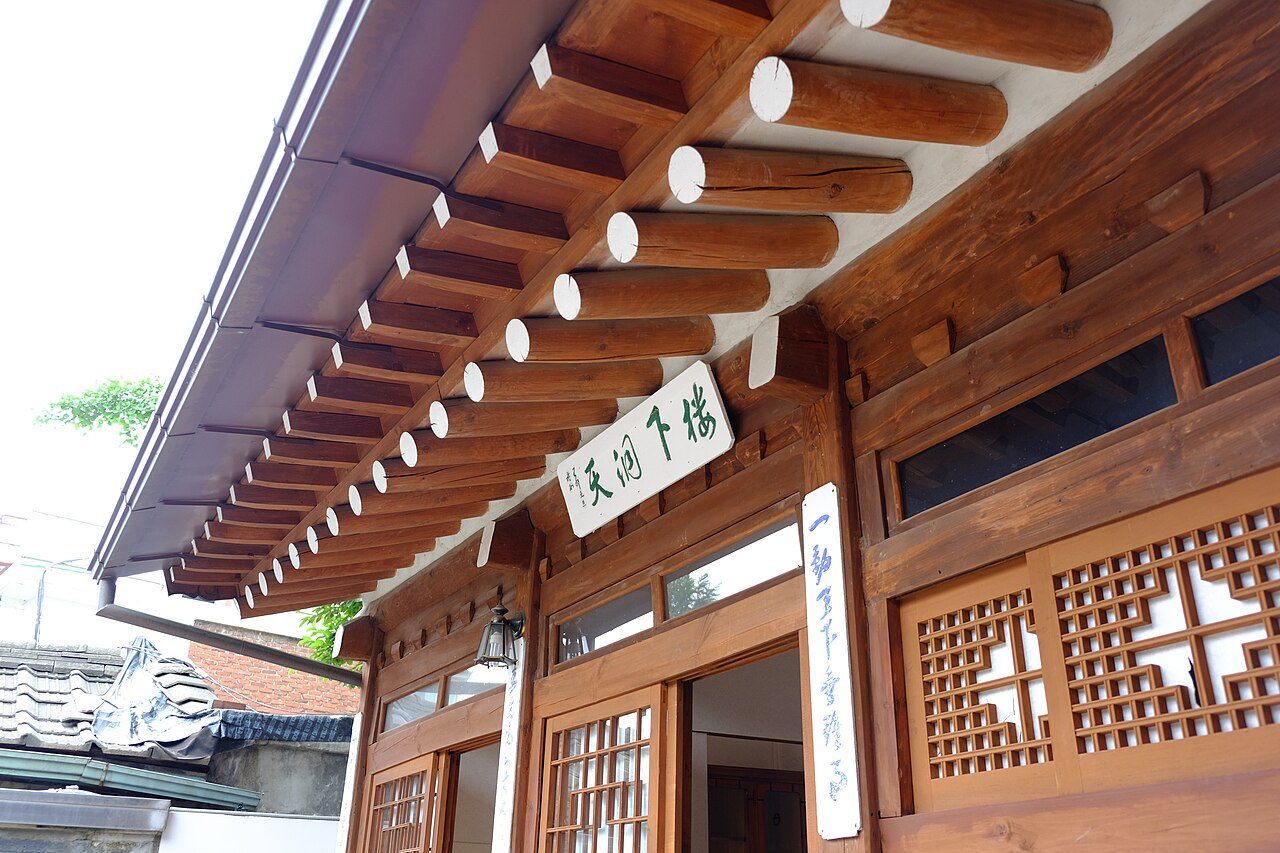
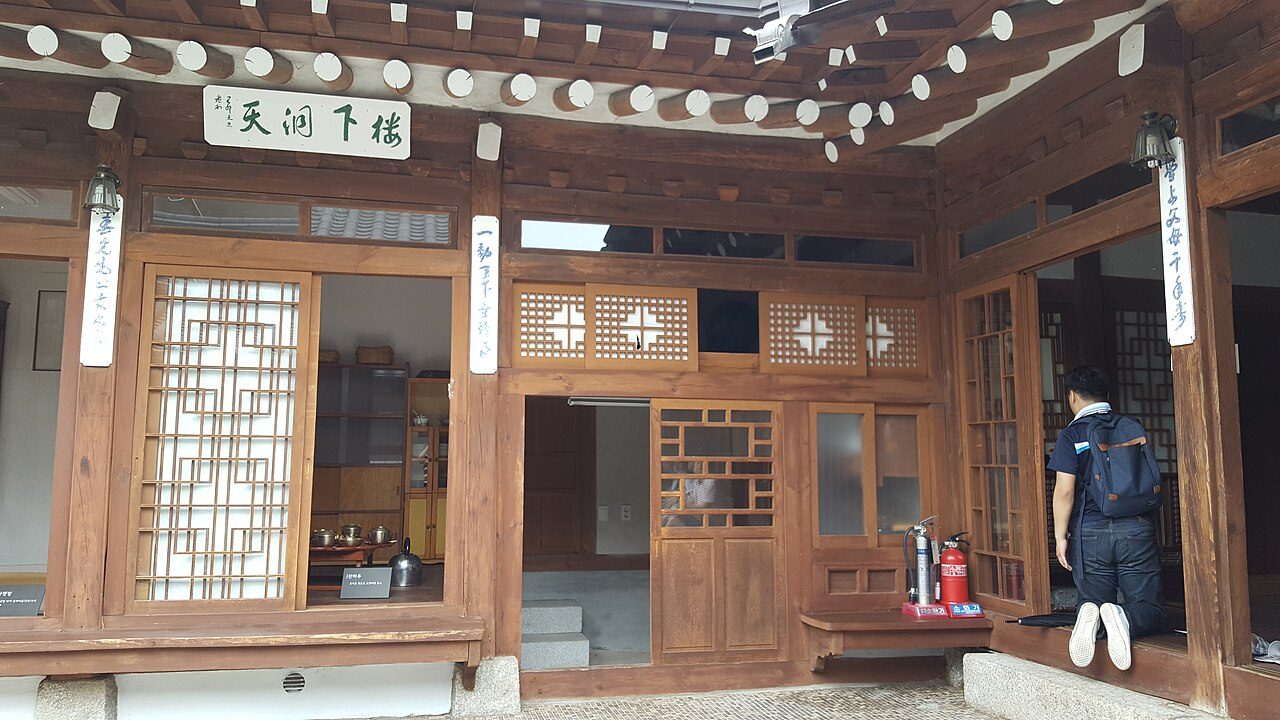
A long-empty house once owned by the National Police Agency, rebuilt in late 19th-century style and opened in 2017, with main house, sarangchae (사랑채), servants’ quarters and outhouse. Part of the floor is clear acrylic over a working ondol (온돌), so you can look down into the flues; the kitchen keeps its fire-mouth and raised stove. Free; run by the Jongno Culture Foundation.
Yi Sang-beom’s House 이상범 가옥
The painter lived here for 43 years, from 1929 until his death in 1972. It is a textbook urban hanok: a ㄱ-shaped main wing and a straight service wing around a small court, with a studio built beside it in 1938.
Park No-su Art Museum 박노수미술관
A two-storey brick house of the 1930s with ondol rooms and maru (마루) downstairs and fireplaces inside; a deliberate fusion of Korean, Japanese, Chinese and Western building. Compare it with the plain hanok around it to see what wealth looked like in the 1930s.
Yi Sang’s House 이상의 집
A small house where the modernist writer lived for about twenty years in his youth, bought by a heritage trust in 2009 and now a cultural space. Look up at the exposed rafters and infill of the ceiling.
Suseong-dong Valley 수성동 계곡
At the top of the district, where Inwangsan’s stream comes down. It was restored in 2011 after an apartment block was demolished, and the small stone bridge matches the one in Jeong Seon’s 18th-century painting of the spot.

History
In the Joseon period this was the neighbourhood of the jungin (중인), the hereditary ‘middle people’ who staffed the state as interpreters, physicians, clerks and technical officers, while the yangban (양반) elite clustered in Bukchon. According to Seoul’s own history of the district, jungin here took up poetry from the 17th century, and clerks of the royal library formed a poetry society near Inwangsan that met for over thirty years. The painter Jeong Seon (Gyeomjae) also lived in the area and in 1751 painted the Suseong-dong valley. King Yeongjo lived at Changuigung, a residence in the district, before he took the throne.
Most surviving hanok here are 20th-century city houses rather than Joseon mansions. A 2010 report on Seoul’s preservation plans counted 663 hanok in Cheongun-dong and Hyoja-dong alone and described them as everyday houses built mostly after the 1920s, different from Bukchon’s but still worth keeping; in 2014 the city counted 722 of them when it launched a resident-led regeneration scheme for the Sejong Village area.
The district also shows the colonial elite’s taste. Yun Deok-yeong, a court official who helped bring about Japan’s annexation of Korea in 1910, built several houses here, including a two-storey brick house for his daughter that later belonged to the painter Park No-su and is now his museum. Writers and artists, among them the painter Yi Sang-beom, the poet Yun Dong-ju and the writer Yi Sang, lived in Seochon in the 20th century.
Getting there
Seoul Subway Line 3 to Gyeongbokgung Station, Exit 2 or 3, then walk west
Take Seoul Subway Line 3 to Gyeongbokgung Station. Visit Seoul gives Exit 2 for Tongin Market and Sangchonjae, and Exit 3 as the start of its Seochon walking course. From there the lanes rise westward towards Inwangsan; Suseong-dong Valley is at the top, roughly 20 minutes’ walk uphill.
Seochon is a short walk from the west gate of Gyeongbokgung, so it pairs naturally with a palace visit.
Route checked 15 November 2026 against: Seochon (walking tour) (Visit Seoul (Seoul Tourism Organization)); Seochon Village (VisitKorea (Korea Tourism Organization)). Bus numbers and stops change: check the official page before you set off.
When to go
SpringSummerAutumnWinter
Spring brings blossom around Inwangsan’s lower slopes and autumn colour fills Suseong-dong Valley. Seochon is far less crowded than Bukchon even at weekends, but the lanes are residential, so keep evening visits quiet.
Sources
- Seochon Village, VisitKorea (Korea Tourism Organization) (read 15 November 2026)
- Seochon (walking tour), Visit Seoul (Seoul Tourism Organization) (read 15 November 2026)
- 세종대왕 나신 곳, ‘세종마을’ 아세요?, Seoul Metropolitan Government (Mediahub) (read 15 November 2026)
- [문화의 향기 가득한 우리 동네] 서촌, 한옥 공동체에 빠지다, Seoul Shinmun (read 15 November 2026)
- 옥인동 박노수 가옥, Korea Heritage Service (National Heritage Portal) (read 15 November 2026)
- 시원한 툇마루에 앉아 볼까…되살아난 전통 한옥 ‘상촌재’, Seoul Metropolitan Government (Mediahub) (read 15 November 2026)
- [한옥이 되살아난다] 북촌1구역은 한옥만 신축 허용, Seoul Shinmun (read 15 November 2026)