

Seoul · Jongno-gu, Seoul · Palace residence
Unhyeongung Royal Residence 서울 운현궁
Seoul Unhyeongung
The Regent’s house where King Gojong grew up and married: three surviving 1860s halls, free to enter, a minute from Anguk Station.
Unhyeongung was the private residence of Yi Ha-eung, the Heungseon Daewongun (흥선대원군), whose son became King Gojong in 1863. It is called a ‘gung’ (궁), a palace, but what survives is a house: three timber halls around courtyards, built on the scale of a very grand family home rather than a seat of government.
That makes it an instructive middle term between Yeongyeongdang, a palace building dressed as a scholar’s house, and the yangban (양반) homes of Bukchon. Here you see a real family’s quarters, the men’s hall where the Regent received visitors and the women’s halls where his wife lived, enlarged and refined with royal money but still organised like a home. Entry is free and the halls are open, so you can look straight into rooms furnished as they were used.
What to look at
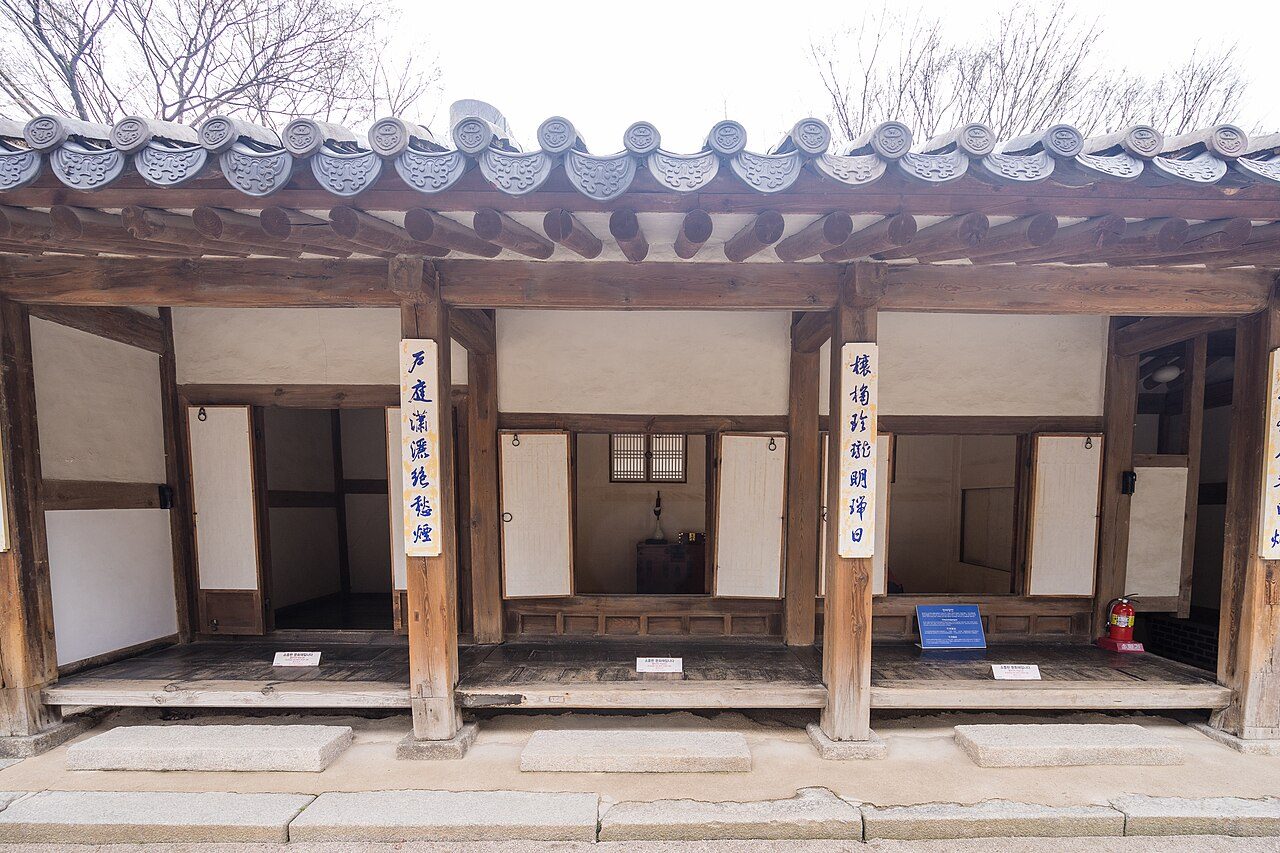
Noandang 노안당
The sarangchae (사랑채), the men’s hall at the front of the complex where the Daewongun lived, worked and met visitors. Rooms are set up with figures showing him painting orchids and receiving guests. Note how it faces the outer courtyard, the public side of the house.
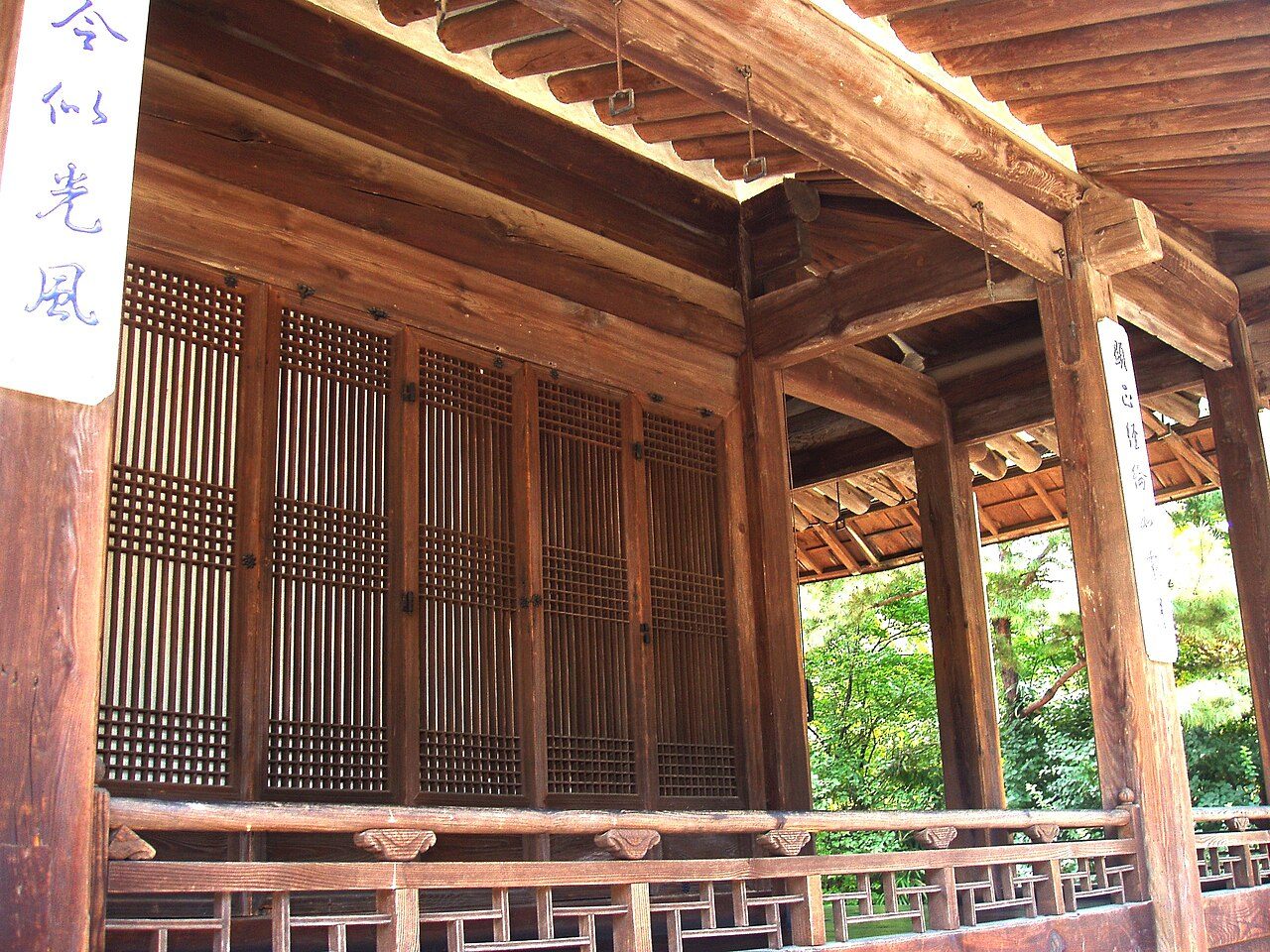
Norakdang 노락당
The largest hall and the anchae (안채) of the Daewongun’s wife, built in 1864 and used for family occasions such as sixtieth-birthday feasts. The 1866 royal wedding rite took place here; its courtyard is where the wedding re-enactment is staged today.
Irodang 이로당
Added in 1869, its name means ‘house of the two elders’, meaning the Daewongun and his wife. It was the most private of the inner quarters and was linked to Norakdang by a corridor; look for how the women’s rooms are tucked away from the entrance.
The haengnangchae and courtyards 행랑채
The long service wing that runs east-west behind Noandang, where servants lived and goods were stored, divides the men’s front court from the inner quarters. Walk the sequence front to back to feel the progression from public to private space that structures every large hanok.

History
Gojong was born in 1852 and lived here until December 1863, when he succeeded King Cheoljong at the age of eleven, his father having won the backing of the Queen Dowager who controlled the succession. With his son on the throne, the Daewongun ruled as regent for about a decade, and the old house was rebuilt and greatly enlarged. Noandang and Norakdang were completed in 1864, and the court records a celebration of the completion on 24 September that year. At its height the compound spread over ground now occupied by a university, a former broadcasting building and a school, with walls said to run for several ri and four gates, one of them used by the king to come and go from Changdeokgung.
In March 1866 the central rite of Gojong’s wedding to the future Empress Myeongseong was held in Norakdang. A further inner hall, Irodang, was added in 1869. The Daewongun’s political life ended badly; from 1895 he was effectively confined, and he died in 1898.
Much of the compound was lost in the 20th century. The Korea Heritage Service record notes that part of the grounds passed to Duksung Women’s University and a broadcaster, that a Western-style building put up in the 1910s and later used as Duksung’s main hall is included in the designated site, and that other halls and the family shrines disappeared. The site was designated a Historic Site in 1977, and the Seoul Metropolitan Government bought it in 1991. Today three hanok halls remain: Noandang, Norakdang and Irodang.
Getting there
Seoul Subway Line 3 to Anguk Station, Exit 4, about 100 m
Take Seoul Subway Line 3 to Anguk Station. Visit Seoul gives Exit 4, about 100 m from the gate on Samil-daero.
Unhyeongung is a short walk from Bukchon (north across Yulgok-ro) and from Insa-dong, and about ten minutes on foot from Changdeokgung’s main gate.
Route checked 15 November 2026 against: Unhyeongung Palace (Visit Seoul (Seoul Tourism Organization)); Unhyeongung Royal Residence (VisitKorea (Korea Tourism Organization)). Bus numbers and stops change: check the official page before you set off.
When to go
SpringSummerAutumnWinter
Pleasant in spring and autumn. The residence stages a re-enactment of the 1866 royal wedding and seasonal programmes such as a Chuseok folk festival (September-October); check the official site for dates. In autumn 2026 the residence also opened into the evening on most days. Quiet on weekday mornings.
On screen
- Goong (Princess Hours) (2006, drama): Unhyeongung, Jongno-gu, Seoul
Sources
- 서울 운현궁, Korea Heritage Service (National Heritage Portal) (read 15 November 2026)
- Unhyeongung Royal Residence, VisitKorea (Korea Tourism Organization) (read 15 November 2026)
- 고종과 흥선대원군이 머문 공간, ‘운현궁’에 얽힌 이야기, Seoul Metropolitan Government (Mediahub) (read 15 November 2026)
- 흥선대원군 사저 ‘운현궁’을 가다, Seoul Metropolitan Government (Mediahub) (read 15 November 2026)
- 운현궁 보수·정비 공사 마무리, Seoul Metropolitan Government (read 15 November 2026)
- Unhyeongung Palace, Visit Seoul (Seoul Tourism Organization) (read 15 November 2026)