

Chungcheong · Asan, South Chungcheong · Historic village
Oeam Folk Village 아산 외암마을
Asan Oeam Maeul
A lived-in Yean Yi clan village under Seolhwasan: stone-walled lanes, thatched farmhouses and gentry houses with gardens fed by a mountain stream.
Overnight staysLived in
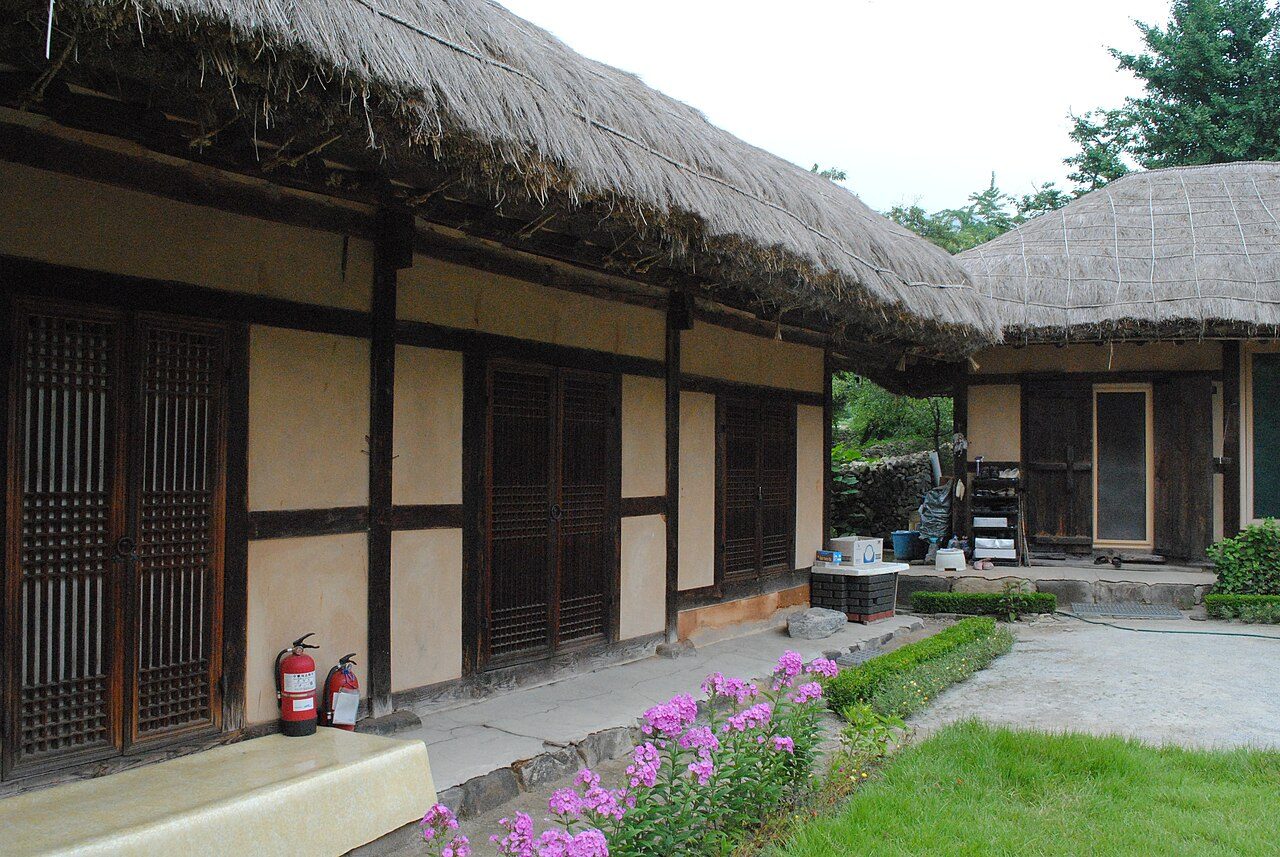
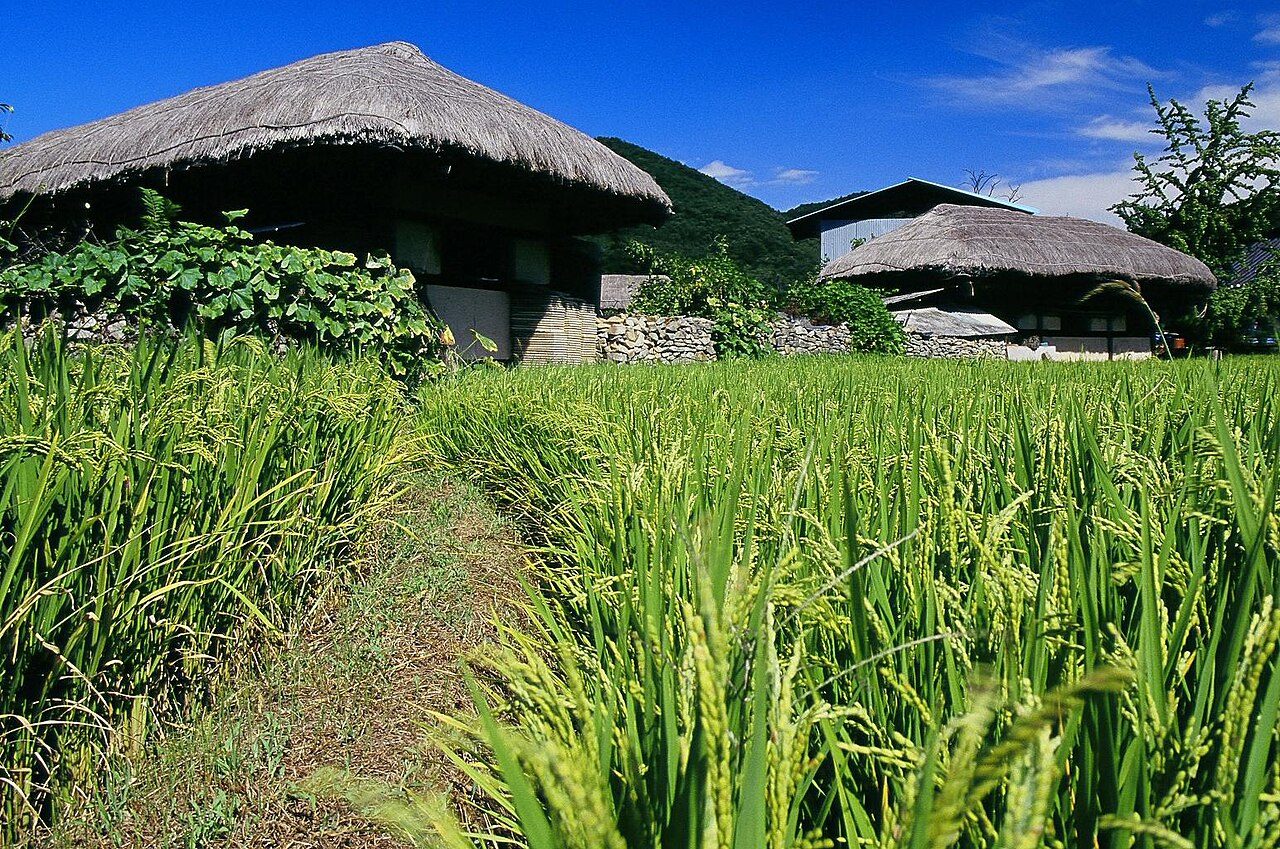
Oeam is a working farming village on the lower slope of Seolhwasan mountain, south of Asan, where the descendants of one clan still live among old houses. Its pleasure is in the lanes: long stone walls enclose tiled yangban (양반) houses and around fifty thatched choga (초가) homes, with fields running right up to the gates.
For understanding the hanok (한옥), Oeam’s value is that it keeps upper, middle and lower-class houses side by side in one community, built by traditional methods, which the Korea Heritage Service singles out as rare. It also shows how a village used water: a stream from the mountain is led through the village and into private gardens, a feature the heritage record describes as distinctive.
What to look at
Stone-walled lanes 돌담길
The walls are the village’s signature, linking house to house and guiding you from lane to lane, with old trees around them. The heritage record credits them, with the surrounding woods, for much of the village’s old-world character; compare them with the plastered, tiled walls of Seoul houses.
Geonjae house (Yeongam-daek) 건재고택
The finest house here, rebuilt in 1869. Two ㄱ-shaped wings face each other to make an open ㅁ-shaped court. Its garden is unusual: trees planted informally across the yard, a pond with a ‘turtle island’ borrowed from Japanese garden design, and the mountain stream led through the garden into the pond. Visits may be restricted; check before you go.
Champan-daek 참판댁
Two houses, a larger and a smaller, built side by side behind a shared wall. The gate wing of the main house is turned slightly so the men’s quarters are not visible straight through the gate, and a stone-walled approach lengthens the entry: two ways of creating privacy without closing a house off.
Thatched houses 초가
About fifty choga stand among the tiled houses, and the heritage record notes they keep their old form. At the Geonjae house the servants’ quarters are a thatched house outside the compound wall: social rank, made visible in roofing material and in which side of the wall you lived on.
Jangseung at the village entrance 장승
The village keeps carved jangseung guardian posts, and its main communal rite, a ceremony for them, is held each year on the 14th day of the first lunar month.

History
Tradition, as recorded by the Korea Heritage Service, holds that families named Gang and Mok first settled here about 500 years ago. In the reign of King Myeongjong in the 16th century Yi Jeong, a minor official, moved in, and his descendants of the Yean Yi clan came to dominate the village, producing scholars and officials. The village took its present name from the pen-name ‘Oeam’ of Yi Gan (1677-1727), Yi Jeong’s sixth-generation descendant and an official under King Sukjong.
Most of the large houses date from the 19th century. The Geonjae house, also called Yeongam-daek, was rebuilt in its present form in 1869 by Yi Sang-ik on the site where Yi Gan was born. The Champan-daek was built in the late 19th century for Yi Jeong-ryeol, a royal library official and vice-minister, on land said to have been granted by King Gojong.
The whole village was designated National Folklore Cultural Heritage in January 2000; the Champan-daek (1984) and Geonjae house (1998) had been designated individually earlier. The Chungnam provincial tourism site describes about 80 households living here today, and the village runs hanok homestays.
Getting there
Seoul Subway Line 1 or KTX/SRT to Onyangoncheon or Cheonan-Asan, then Asan city bus 120 to the village, about 40 min
By rail, take a KTX or SRT to Cheonan-Asan Station or a Seoul Subway Line 1 or Korail train to Onyangoncheon Station. From the Onyang area, Asan city bus 120 runs to the Oeam village stop, but only about every two hours; buses 100, 111, 130 and 140 run more often to the Songak Township Office, from where you walk to the village. Allow about 40 minutes on the bus.
The bus details come from the Asan Cultural Foundation’s page for the straw festival held in the village; check current routes locally before you travel.
Route checked 15 November 2026 against: 아산짚풀문화제 오시는길 (Asan Cultural Foundation (Asan City)). Bus numbers and stops change: check the official page before you set off.
When to go
SpringSummerAutumnWinter
Autumn is the village’s season: the straw and grass culture festival is held in October, around harvest. In late spring the village has also held night openings (late May in 2026). Winter is quiet and cold, with the jangseung rite on the 14th day of the first lunar month.
Sources
- 아산 외암마을, Korea Heritage Service (National Heritage Portal) (read 15 November 2026)
- 아산 외암마을 건재고택, Korea Heritage Service (National Heritage Portal) (read 15 November 2026)
- 아산 외암마을 참판댁, Korea Heritage Service (National Heritage Portal) (read 15 November 2026)
- Oeam Folk Village, VisitKorea (Korea Tourism Organization) (read 15 November 2026)
- 아산 외암민속마을, Chungcheongnam-do Tourism (tour.chungnam.go.kr) (read 15 November 2026)
- 외암민속마을 (official site), Oeam Folk Village (read 15 November 2026)
- 아산짚풀문화제 오시는길, Asan Cultural Foundation (Asan City) (read 15 November 2026)